

Key Takeaways
- The FDA investigated a possible link between grain-free diets and dilated cardiomyopathy (DCM) in dogs starting in 2018.
- No causal relationship between grain-free food and DCM has been confirmed by research to date.
- Grains are not allergens for most dogs; true grain allergies are uncommon.
- Dogs with no diagnosed grain sensitivity do not benefit nutritionally from grain-free formulas.
- Consulting a veterinarian before switching diets is the most reliable path to a safe feeding decision.
How grain-free dog food became mainstream
Grain-free dog food moved from specialty stores to mainstream retailers in the early 2010s, driven largely by owner interest in low-carbohydrate and ancestral-style diets. The reasoning seemed intuitive: wild canids do not harvest wheat, so why feed it to domestic dogs? That premise spread quickly, and grain-free products captured a large share of the premium pet food market within a few years.
What followed was a more complicated story. In 2018, the U.S. Food and Drug Administration (FDA) announced it was investigating reports of dilated cardiomyopathy (DCM), a serious heart condition, in dogs eating grain-free diets. The announcement drew wide attention and left many owners uncertain about what to feed their pets. Before making any decision, it helps to separate what the evidence actually shows from what has been assumed or misreported.
If you are new to thinking about dog nutrition broadly, the plain-language introduction to pet nutrition covers the core concepts worth understanding first.
Common myths and what the evidence shows
Below are the misconceptions that appear most often in owner discussions, paired with what researchers and veterinary nutritionists have actually found.
Myth
Grains are harmful fillers that provide no nutritional value to dogs.
Fact
Whole grains are digestible by dogs and supply fiber, B vitamins, and energy. They are not inert fillers.
Dogs produce amylase in the pancreas, which allows them to digest starch effectively, a trait that developed alongside thousands of years of coexistence with humans eating grain-based foods. Whole grains such as brown rice, oats, and barley contribute meaningful nutrients. The "filler" label originated in marketing, not nutrition science. Low-quality grains used in excess can be a problem, but that is a formulation issue, not a grain issue.
Myth
Most dogs that react badly to food are allergic to grains, especially wheat or corn.
Fact
Food allergies in dogs are uncommon overall, and when they occur, the most frequent triggers are animal proteins, not grains.
Veterinary dermatology literature consistently identifies beef, dairy, chicken, and lamb as the most common food allergens in dogs. Wheat and corn allergies exist but are far less prevalent. Owners sometimes interpret itching, loose stools, or flatulence as grain sensitivity, but these symptoms have many causes. A proper diagnosis requires a strict hydrolyzed or novel-protein elimination diet conducted under veterinary guidance, not a simple food swap.
Myth
Grain-free diets are definitively proven to cause heart disease in dogs.
Fact
An association between grain-free diets and DCM was reported, but no causal link has been established by research.
The FDA's investigation identified a statistical association in its case reports, but association is not the same as causation. The mechanism, whether legume-heavy formulations affect taurine synthesis, amino acid bioavailability, or something else entirely, remains under study. Some affected dogs recovered after switching diets and receiving taurine supplementation; others with DCM were not eating grain-free food at all. The picture is incomplete, and responsible interpretation of the data requires acknowledging that uncertainty.
Myth
A grain-free diet is automatically healthier because it is lower in carbohydrates.
Fact
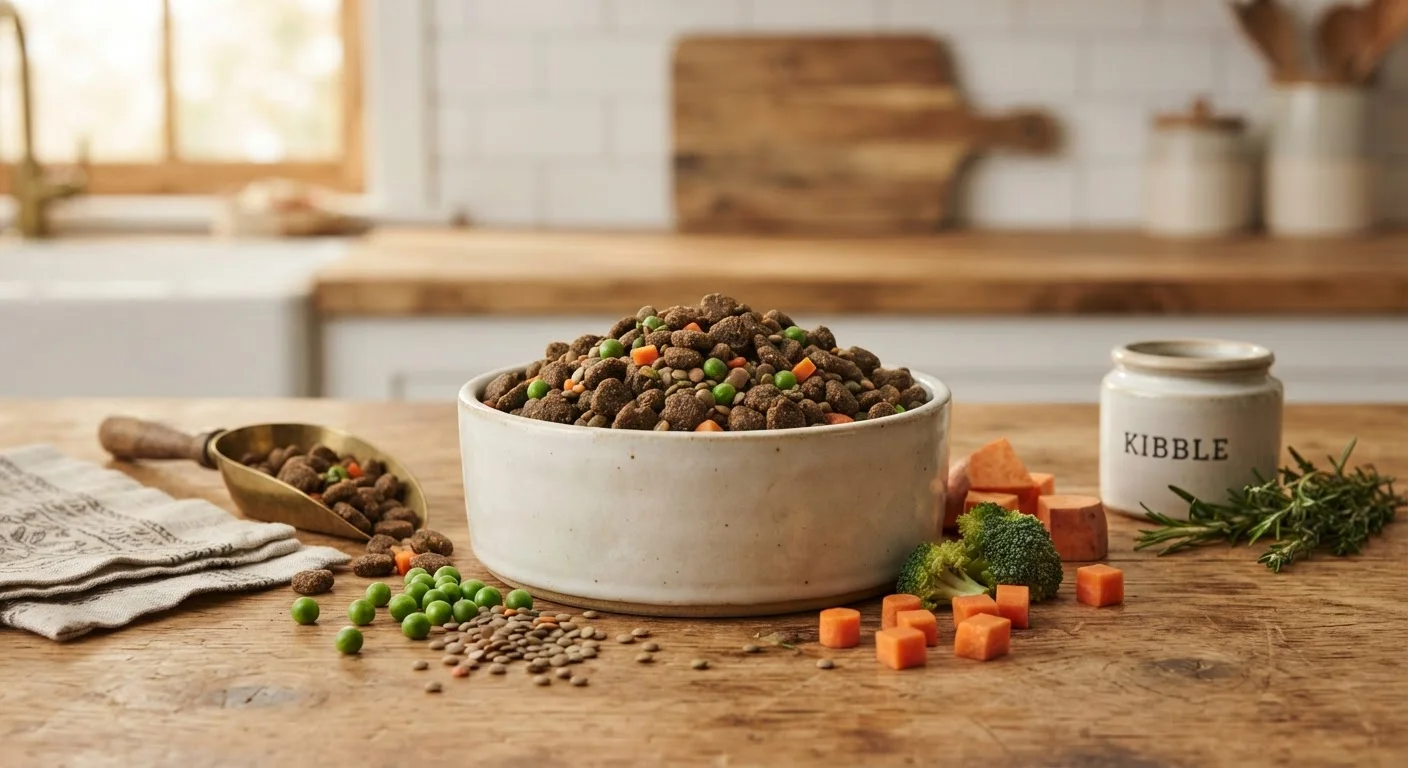
Grain-free formulas frequently replace grains with other high-carbohydrate ingredients like potatoes, peas, and tapioca.
Many grain-free products are not low-carbohydrate products. Manufacturers substitute grains with legumes, sweet potatoes, or cassava, all of which are significant carbohydrate sources. Total carbohydrate content can be similar to or higher than a standard kibble. Owners seeking a lower-carb diet for a specific health reason (such as weight management) should check the guaranteed analysis and consult a veterinarian rather than assume the grain-free label signals low carbs.
Myth
Grain-free food is the right choice for any dog because it mirrors a natural wild diet.
Fact
Domestic dogs are physiologically distinct from wild canids and have adapted to diets that include starch.
Genomic research published in journals including Nature has identified that domestic dogs carry more copies of the gene coding for pancreatic amylase than wolves do, a change associated with adaptation to starch digestion. Wild canid diets also include partially digested plant matter from prey stomachs. The "ancestral diet" argument oversimplifies canine evolutionary history and does not account for the metabolic differences between wild and domestic dogs.
What the DCM investigation found and did not find
The FDA's investigation, ongoing through several update reports, identified breeds not historically prone to DCM (including Golden Retrievers, Labrador Retrievers, and mixed breeds) developing the condition while eating grain-free diets heavy in peas, lentils, other legumes, or potatoes. The agency collected hundreds of reports, but the total number of confirmed DCM cases remained small relative to the tens of millions of dogs eating grain-free food.
Critically, the reports showed an association, not causation. Researchers proposed several mechanisms, including disrupted taurine (an amino acid) metabolism linked to high legume content, but none has been confirmed as the definitive cause. Some studies found taurine deficiency in affected dogs; others did not. The FDA stated in a 2019 update that it was not recommending any specific diet change at that time, and veterinary cardiologists have noted that DCM has multiple genetic and dietary contributors.
Watch for DCM symptoms in at-risk breeds
Breeds with a genetic predisposition to DCM include Doberman Pinschers, Great Danes, Boxers, and Irish Wolfhounds. If your dog shows decreased energy, exercise intolerance, coughing, or a distended abdomen, contact a veterinarian promptly. These symptoms can indicate cardiac issues regardless of diet. Do not wait to see whether a diet change resolves them.
For a broader look at how different food formats compare nutritionally, the wet food, dry kibble, and raw diet comparison covers protein quality, moisture content, and other tradeoffs across formats.
Making a practical feeding decision
For dogs with a confirmed grain intolerance or allergy (diagnosed through a veterinary elimination diet trial, not an at-home assumption), a grain-free formula may be appropriate. For dogs with no such diagnosis, the nutritional case for grain-free food is thin. Whole grains in commercial dog food provide digestible carbohydrates, B vitamins, and fiber; they are not nutritional liabilities.
If you are weighing different food formats beyond the grain question, a side-by-side look at dry kibble versus wet food can help you think through the practical tradeoffs. And if raw diets are part of the conversation, the evidence on raw diets for dogs covers what veterinary research supports.
The most reliable step any owner can take is a conversation with a veterinarian or board-certified veterinary nutritionist, especially for dogs with health conditions, breed-specific risks, or unusual symptoms. Dietary trends cycle; individualized guidance does not.
This article is for informational purposes only and is not veterinary medical advice. Always consult a licensed veterinarian before making significant changes to your dog's diet.