

Key Takeaways
- Raw diets carry documented food safety risks, including bacterial contamination that can affect both dogs and their owners.
- Most raw diets are not nutritionally complete without careful, professional formulation.
- Dogs do not have a digestive system that makes them immune to pathogens found in raw meat.
- Veterinary and food safety organizations generally advise against raw feeding, especially in households with immunocompromised individuals.
- If you choose a raw diet, veterinary guidance and proper food handling are non-negotiable.
Why raw diets have become so popular
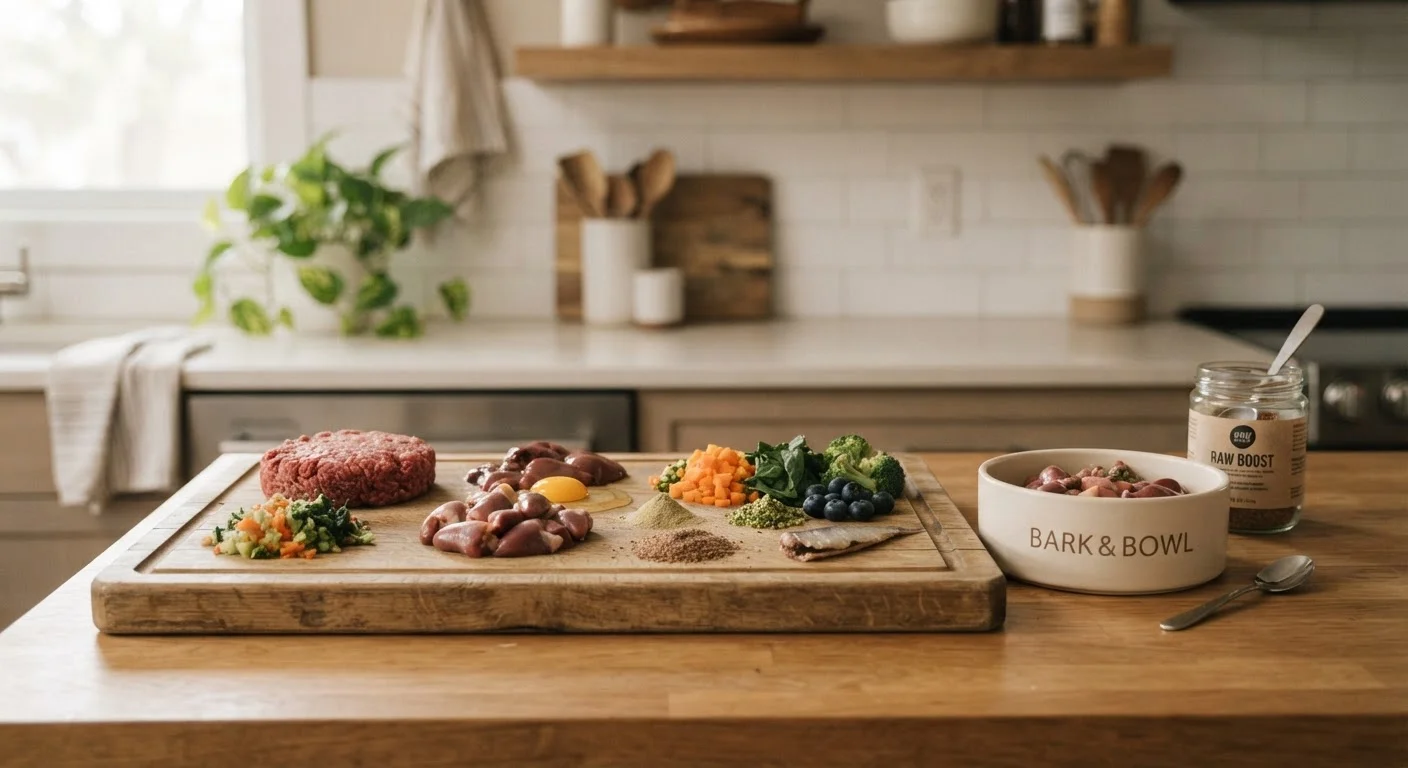
Raw diets for dogs, often called BARF (Biologically Appropriate Raw Food) diets, typically include uncooked muscle meat, organ meat, raw eggs, bones, and sometimes fruits or vegetables. Interest in this feeding style has grown over the past two decades, driven by concerns about processed pet food ingredients and a general preference for what feels more natural. The appeal is understandable. Unfortunately, popularity does not make a practice safe or nutritionally sound.
For a clear comparison of how raw feeding stacks up against other formats, the wet, dry, and raw nutrition breakdown covers the tradeoffs in detail. The myths below are the ones veterinary professionals encounter most often.
Myth
Dogs are descended from wolves, so they are built to eat raw meat safely.
Fact
Domestic dogs have undergone thousands of years of genetic change from wolves, including adaptations to starch digestion, and they are not immune to foodborne pathogens.
Domestication changed dogs significantly. Research published in Nature identified multiple gene copies related to amylase production in dogs, an adaptation linked to starch-heavy diets alongside humans. Their digestive systems are not identical to wolves, and neither group is reliably resistant to bacteria like Salmonella or Listeria. A dog can carry and shed these pathogens without appearing sick, which creates a real exposure risk for people in the household, particularly children and anyone with a weakened immune system.
Myth
Raw diets are always more nutritious than commercial dog food.
Fact
Raw diets are frequently nutritionally incomplete unless formulated by a board-certified veterinary nutritionist.
Commercial dog foods that carry an AAFCO (Association of American Feed Control Officials) nutritional adequacy statement have been tested or formulated to meet established nutrient profiles. Many home-prepared raw diets skip this step entirely. Deficiencies in calcium, vitamin D, and iodine are commonly documented in raw diet analyses. Surpluses of certain nutrients, particularly vitamin A from heavy organ meat use, can also cause toxicity over time. Complete does not mean raw or cooked; it means the diet contains the right amounts of all required nutrients.
Myth
Cooking destroys all the nutritional value in dog food.
Fact
Heat processing reduces some heat-sensitive nutrients, but commercial manufacturers account for this during formulation and supplementation.
Some B vitamins and enzymes are sensitive to heat, and cooking does alter them. Commercial pet food manufacturers measure post-processing nutrient levels and adjust formulas accordingly. The finished product, not the pre-cooked ingredients, is what matters for nutritional adequacy. Protein digestibility in cooked meat is generally well-maintained and can actually improve when heat denatures certain proteins. The idea that cooking eliminates nutrition is an oversimplification that does not reflect how pet food formulation works in practice.
Myth
Raw bones are safe because dogs have always chewed bones.
Fact
Raw bones carry real risks of fractured teeth, intestinal perforation, and choking, and the safety profile varies widely by bone type and dog size.
Veterinary dentists frequently see slab fractures of the carnassial teeth (the large shearing teeth) from dogs chewing weight-bearing bones. Fractured teeth are painful and expensive to treat. Bone fragments can also cause gastrointestinal obstruction or perforate the intestinal wall, a surgical emergency. The AVMA advises against feeding any bones to dogs. If your dog chews recreationally, a veterinarian can help you identify safer options that satisfy that behavior without the documented risks.
Myth
If my dog seems healthy on raw food, the diet must be fine.
Fact
Nutritional deficiencies and pathogen shedding can occur without visible symptoms for months or years before clinical signs appear.
Dogs are good at compensating for dietary gaps in the short term. Bone density loss, for example, may not show up until a fracture occurs. A dog shedding Salmonella in its feces may show no digestive symptoms at all, while still contaminating surfaces that people touch. Apparent good health is not a reliable measure of nutritional adequacy or food safety compliance. Routine veterinary checkups, including bloodwork, give a more accurate picture than outward appearance alone. You can find related misconceptions addressed in the common pet health myths article.
What the research actually supports
The American Veterinary Medical Association (AVMA) and the Centers for Disease Control and Prevention (CDC) have both published guidance discouraging raw meat-based diets for pets, citing the risk of bacterial pathogens including Salmonella, Listeria, and E. coli. These are not hypothetical risks. Studies have detected these organisms in commercially prepared raw pet foods at measurable rates.
Nutritional adequacy is the second major concern. A 2001 study published in the Journal of the American Veterinary Medical Association found that many home-prepared raw diets were deficient in calcium, phosphorus, and key vitamins. Without professional formulation, achieving balance is genuinely difficult. This concern applies to grain-free diets as well, a topic covered in the grain-free dog diet science article.
If you are comparing raw feeding to conventional options, the dry kibble vs. wet food comparison provides a grounded look at what commercial formats offer. Decisions about your dog's diet belong in a conversation with your veterinarian, who can assess your dog's individual health status and your household's circumstances.
This article is for informational purposes only and is not a substitute for veterinary advice. Consult a licensed veterinarian before making changes to your dog's diet.