

Key Takeaways
- Feather plucking is a symptom, not a diagnosis, and always warrants a veterinary examination first.
- Medical causes such as infections, skin parasites, and nutritional deficiencies account for a significant portion of FDB cases.
- Psychological triggers include boredom, social isolation, sudden changes in routine, and chronic stress.
- Environmental factors like low humidity, poor air quality, and inadequate cage enrichment can drive or worsen the behavior.
- Early intervention generally leads to better outcomes than waiting to see if the behavior resolves on its own.
Feather destructive behavior
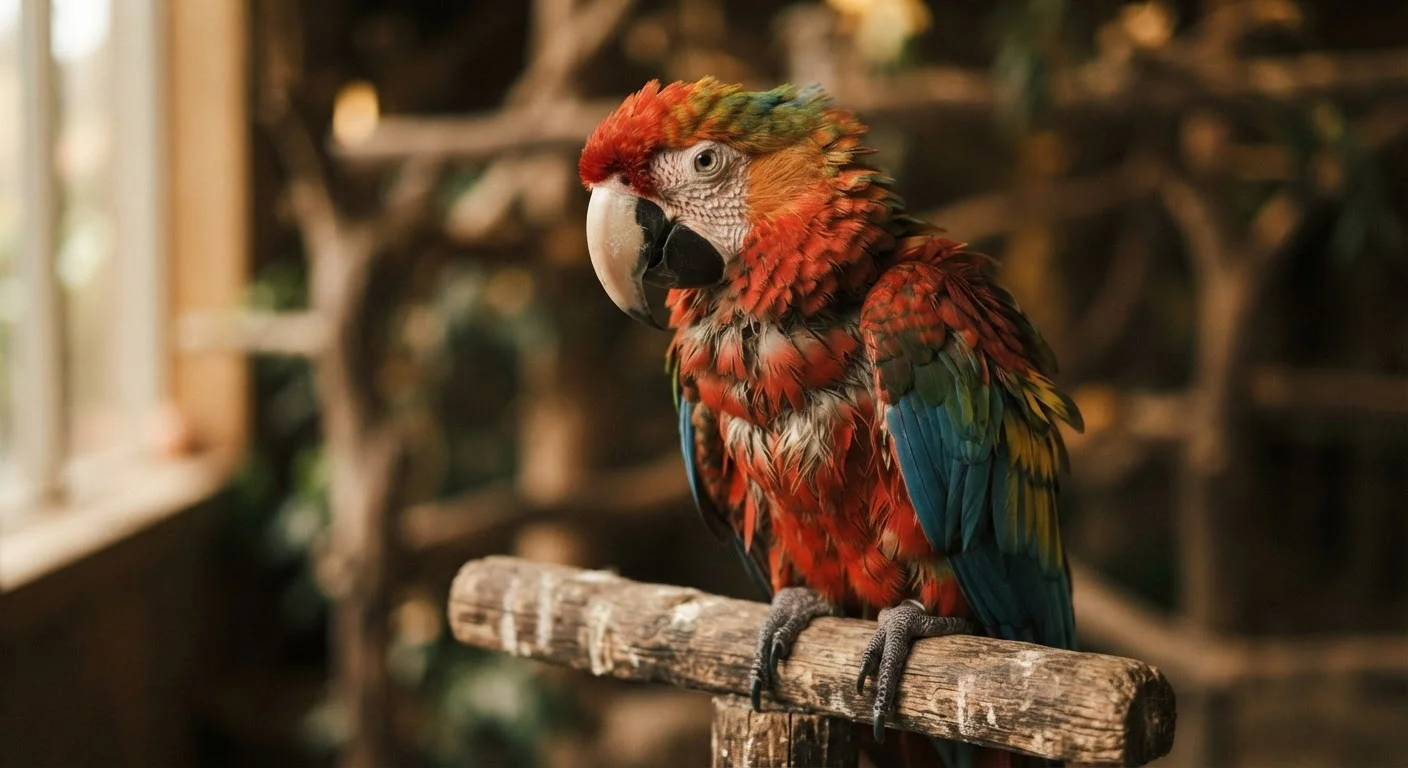
Feather destructive behavior (FDB) is when a pet bird repeatedly chews, pulls, or damages its own feathers. It is not a single disorder but a symptom that can stem from physical illness, psychological stress, or environmental problems. Birds may pluck feathers from their chest, legs, or wings while leaving the head feathers intact, since they cannot reach that area themselves.
Avian veterinarians distinguish FDB from the normal molting process and from barbering, where a bird trims rather than removes feathers entirely. A thorough diagnostic workup is recommended before assuming the cause is purely behavioral.
What feather destructive behavior actually looks like
Feather destructive behavior covers a range of actions: pulling feathers out at the root, chewing feather shafts until they fray, or breaking feathers midway. The chest, abdomen, and inner thigh areas are the most commonly affected, because these are within easy reach of the bird's beak.
Owners sometimes mistake early FDB for normal molting, but there are clear differences. Molting produces uniform feather loss and replacement across the body. FDB produces patchy, ragged, or bare areas, often with feather debris at the bottom of the cage. Some birds pluck only occasionally; others create large bald patches within days.
It is worth noting that a bird plucking its own feathers is distinct from one bird plucking another (called allopreening or barbering). Both warrant attention, but they point to different dynamics in the household or flock.
Medical causes that must be ruled out first
Before any behavioral explanation is considered, a physical cause must be excluded. Skin conditions are a frequent culprit: bacterial folliculitis, fungal infections, and Giardia (a common intestinal parasite in birds) can all produce itching that prompts plucking. Viral infections such as Psittacine Beak and Feather Disease (PBFD) directly damage feather development and may cause a bird to pick at abnormal feathers.
Nutritional deficiencies are also linked to FDB. A diet composed mainly of seeds is low in key vitamins and amino acids that support healthy feather and skin condition. This connects directly to what birds eat: see what pet birds can and cannot eat for guidance on building a nutritionally complete diet.
Liver disease, hypothyroidism, and heavy metal toxicity (from zinc or lead found in cage materials) have all been documented as FDB triggers. An avian vet will typically run blood work, skin cytology, and sometimes imaging to evaluate these possibilities before recommending a behavioral plan.
For a broader look at how birds signal illness through behavior, signs your bird may be sick covers the physical and behavioral cues that should prompt a vet call.
Psychological and environmental triggers
Once medical causes are addressed or ruled out, behavioral and environmental factors take center stage. Parrots in particular are highly social animals that form strong bonds and are sensitive to changes in their social world. A bird that loses a bonded companion, experiences a shift in its owner's schedule, or is moved to a new home may begin plucking within weeks.
Boredom is another well-documented trigger. A bird confined to a cage without adequate mental stimulation for many hours a day has few outlets for its natural foraging, chewing, and problem-solving drives. FDB can develop as a displacement behavior, a way of channeling unresolved energy. Cage setup matters: toy variety, foraging opportunities, and perch placement all affect how much mental activity a bird gets each day. setting up an enriching home for your bird gives practical guidance on structuring the environment to reduce behavioral frustration.
Environmental stressors are often overlooked. Dry air (common in heated homes during winter) can cause skin irritation that leads to feather picking. Exposure to cooking fumes, cigarette smoke, or scented candles irritates a bird's respiratory system and skin. Irregular light cycles, loud noise, and unpredictable household activity are each associated with elevated stress in captive birds.
Track the behavior before your vet visit
Keep a simple log for one to two weeks noting when plucking happens, which body areas are affected, and what was occurring in the household at the time. Photos of the affected areas help the vet assess severity and progression. This information shortens the diagnostic process considerably.
Calming strategies and long-term management
Management of FDB works best as a layered approach. Start with the veterinarian's recommendations, which may include medication for skin infections, dietary changes, or in some cases anti-anxiety medication for severe cases.
On the behavioral side, foraging enrichment is the most consistently supported strategy. Hide food inside paper rolls, puzzle feeders, or wrapped in leaves so the bird has to work to find it. Rotate toys weekly to maintain novelty. Increase out-of-cage time when possible, and give the bird access to a safe play area where it can climb, chew, and explore.
Predictable daily routines help birds feel secure. Feed, cover, and uncover the cage at consistent times. Sudden changes in who interacts with the bird or when interaction occurs can heighten anxiety. Where changes are unavoidable, introduce them gradually.
If the bird plucks most during specific situations (when left alone, when the television is on, or during nighttime hours), that pattern is informative. Adjusting those conditions, such as providing a foraging toy before the owner leaves, can interrupt the trigger-response cycle.
Progress is often slow. Some birds improve substantially within a few months of environmental and medical intervention; others manage but never fully stop. Consistent, patient management without punishment is the standard approach recommended by avian behaviorists and veterinary professionals.