

Key Takeaways
- Cage size matters more than most owners expect: bigger is nearly always better.
- Perch variety prevents foot problems and boredom in captive birds.
- Air quality is a genuine health concern because birds have sensitive respiratory systems.
- Toy rotation keeps the environment stimulating without overwhelming the bird.
- Placement within the home affects stress levels and social bonding significantly.
What you will need
Why the environment matters so much for birds
Birds in the wild spend most of their waking hours foraging, flying, socializing, and problem-solving. A captive bird cannot do any of those things unless its environment is designed to support them. A cage that is too small, too bare, or placed in the wrong spot does not simply leave a bird bored: it can produce chronic stress that weakens the immune system and leads to destructive behaviors that are difficult to reverse.
Unlike dogs or cats, birds have relatively few ways to signal distress until the problem has become entrenched. Setting up the environment correctly from the start is far easier than correcting behavioral fallout later. If you are new to bird ownership, our practical starter guide for new small pet owners covers the broader adjustment period in detail.
Cage placement affects long-term wellbeing
A bird placed in an isolated room with minimal human contact will often develop behavioral problems regardless of cage size or toy variety. Birds are social species and need regular interaction with their owners as part of daily life. Build the cage setup around a location where that contact happens naturally, not as a scheduled event.
What you need before you start
Gather your supplies before the bird arrives. Last-minute shopping after the bird is home creates unnecessary disruption during a time when the animal needs calm and consistency. The items below cover the core setup. Optional tools become more worthwhile as you observe your individual bird's habits.
Wire cage with horizontal bars
Provides the main living space; horizontal bars allow climbing exercise.
Natural wood perches (varied diameters)
Promotes foot health by giving the bird different gripping widths.
Rope or cotton perch
Offers a softer surface for resting feet, especially useful for older birds.
HEPA air purifier
Filters dander, feather dust, and airborne particles near the bird's space.
Food and water dishes (stainless steel or ceramic)
Non-porous materials are easier to sanitize and resist bacterial buildup.
Foraging toys and shreddable materials
Encourages natural foraging behavior and reduces boredom-driven feather picking.
Digital thermometer and hygrometer
Monitors temperature and humidity in the bird's area to prevent respiratory stress.
What you will need
Step-by-step setup
Work through the steps below in order. Each one builds on the previous, so skipping ahead can mean redoing work once the bird is already in the space.
Start simple, then build complexity
New birds need time to adjust to their environment before absorbing the full range of enrichment you plan to offer. For the first week, limit the cage to two perches, one toy, and clean food and water stations. Add new elements gradually as the bird shows comfort with its space. This approach also helps you identify which toys and perches the individual bird actually uses.
Choose the right cage size and bar spacing
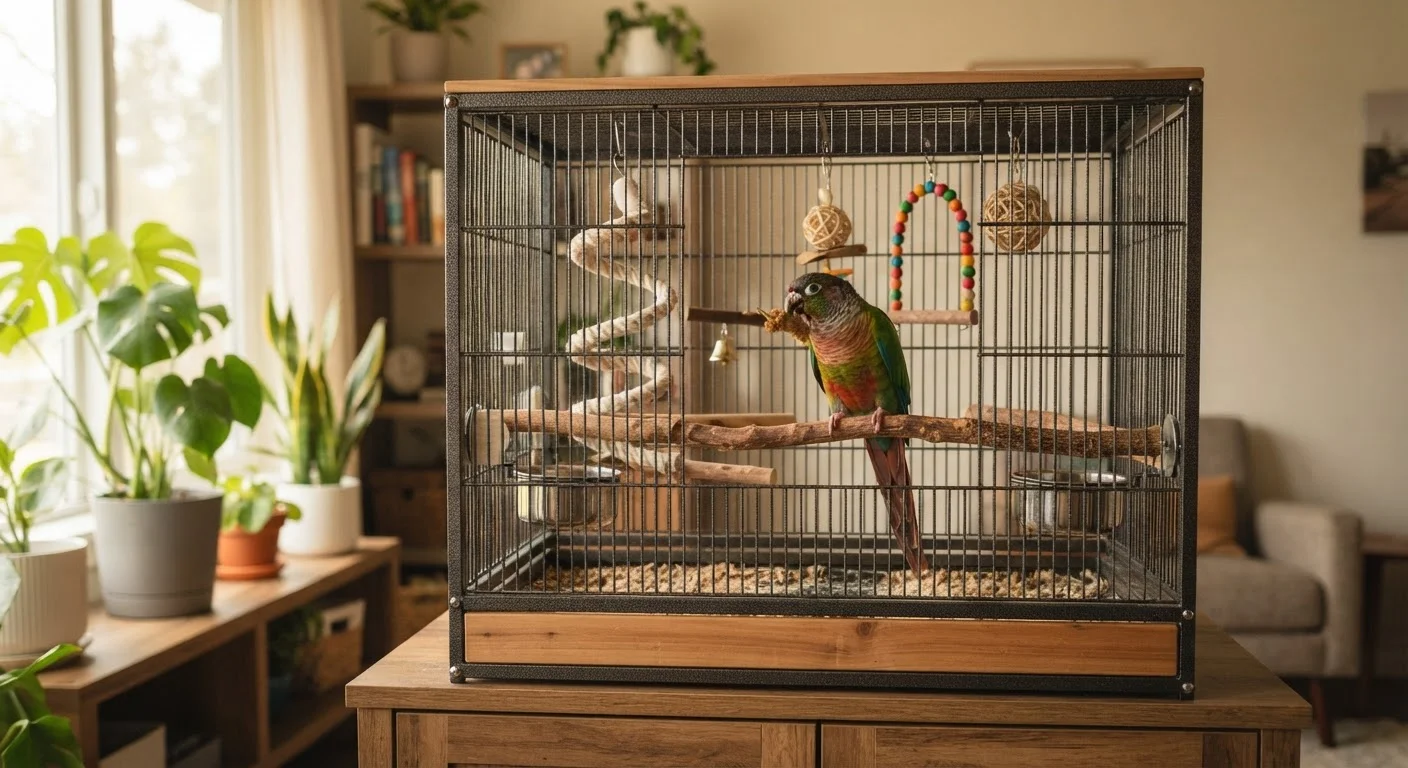
The cage should be large enough for your bird to fully extend both wings simultaneously without touching the sides. For small species such as budgerigars or cockatiels, a minimum footprint of 18 by 18 inches is a starting point, but larger is better. For medium parrots like conures, aim for at least 24 by 24 inches. Bar spacing is equally important: gaps that are too wide allow a bird to wedge its head through and injure itself. Budgies and parrotlets need bar spacing no wider than 1/2 inch; cockatiels and small conures typically do well with 5/8 to 3/4 inch spacing.
Position the cage in the home
Place the cage against a solid wall on at least one side. This gives the bird a sense of security because it cannot be approached from behind. Position the cage at roughly eye level or slightly below so the bird does not feel exposed or threatened by humans looming above. Keep it away from exterior doors, drafty windows, and air conditioning vents. The kitchen is not a safe room for birds: non-stick cookware releases fumes when overheated that are acutely toxic to birds. A living room or bedroom with good natural light is generally suitable.
Install varied perches at different heights
Include at least three perches of different diameters and textures. A natural branch perch (such as manzanita or java wood) at the top of the cage gives a high resting spot. A rope or cotton perch mid-cage provides a softer surface. A smaller dowel or mineral perch near food dishes gives the bird a functional feeding station. Avoid placing perches directly above food or water bowls where droppings will contaminate them. Space perches so the bird can move between them with a short flight or hop rather than cramming too many in and eliminating usable space.
Set up food and water stations
Use at least two food dishes: one for fresh foods and one for pellets or seeds. A separate water dish or sipper bottle should be positioned where droppings cannot fall into it. Stainless steel and ceramic dishes are preferable to plastic because they are easier to sanitize and do not harbor bacteria in surface scratches. Change water daily at minimum. Fresh foods such as leafy greens, vegetables, and occasional fruit should be removed after two to four hours to prevent spoilage. For a detailed look at diet composition, see our guide to seed and pellet trade-offs.
Add toys and rotate them regularly
Birds need mental stimulation to prevent stress-related behaviors such as feather plucking, excessive screaming, or repetitive movements. Provide three to five toys at a time, including a mix of foraging toys (those that hide food inside), shreddable materials (palm fronds, paper rolls), and interactive toys with moving parts. Remove two or three toys weekly and replace them with others the bird has not seen recently. Introducing a toy that looks unfamiliar can initially alarm some birds. Place the new toy near the cage for a day or two before placing it inside so the bird can investigate it from a safe distance.
Manage air quality and household hazards
Birds have a respiratory system that processes air far more efficiently than mammals do, which also makes them more vulnerable to airborne toxins. Remove all non-stick (polytetrafluoroethylene-coated) cookware from rooms the bird has access to, or commit to never overheating it. Avoid aerosol sprays, scented candles, air fresheners, and cigarette smoke near the bird's space. A HEPA air purifier placed a few feet from the cage can reduce ambient dander and dust. Keep humidity in the room between roughly 40 and 60 percent; excessively dry air stresses respiratory tissue.
Common setup mistakes and how to avoid them
The most frequent setup problem is choosing a cage based on what fits the budget or the room rather than what fits the bird. A cage that is marginally adequate now will feel restrictive as the bird becomes more active and confident. If budget is a constraint, prioritize cage size over toys: enrichment items can be added over time, but replacing a cage is more disruptive.
A second common mistake is placing perches of identical diameter. Foot problems such as pressure sores (bumblefoot) are more common in birds that grip the same diameter surface all day. Perch variety is a straightforward prevention measure that costs little.
Finally, many owners underestimate social needs. A bird set up in a back room away from daily household activity may be physically comfortable but behaviorally isolated. Compare that approach with how cat enrichment planning addresses the same challenge: consistent sensory variety and social access matter across species.
This article is for informational purposes only. For species-specific health questions, consult an avian veterinarian.