

Key Takeaways
- Indoor cats need daily physical activity and mental stimulation to stay healthy and calm.
- Rotating toys regularly prevents boredom more effectively than adding more toys at once.
- Vertical space, hiding spots, and window access address core feline behavioral needs.
- Short, consistent play sessions are more beneficial than occasional long ones.
- Environmental enrichment reduces stress-related behaviors such as overgrooming and aggression.
Summary
22 items · 20 to 40 minutes
Why enrichment matters for indoor cats
Indoor cats live longer and face fewer injury and parasite risks than outdoor cats, but the trade-off is a smaller, less varied world. Without enough activity and sensory input, cats can develop stress-related behaviors including overgrooming, inappropriate scratching, and aggression. The core needs of an indoor cat go beyond food and litter: they include opportunities to hunt, climb, hide, and observe their environment.
This checklist gives you a structured way to audit what your cat currently has and identify what is missing. Work through each group at your own pace. You do not need to address everything in a single day.
Physical activity
Vertical and spatial variety
Sensory and cognitive stimulation
Scratching and marking outlets
Social and human interaction
Environment review
Tools and supplies to have on hand
Before working through the checklist, gather or note the items below. Most are inexpensive and widely available at pet supply stores. None require a specific brand.
Wand or fishing-rod toy
Used for interactive daily play sessions that mimic hunting behavior.
Vertical scratching post
Gives your cat a safe, appropriate surface for full-body stretching and claw maintenance.
Puzzle feeder or food-dispensing toy
Slows eating and provides cognitive stimulation by making your cat work for food.
Cat tree or wall-mounted shelf
Provides elevated resting and observation spots that address your cat's need for height.
Window perch or sill pad
Creates a comfortable spot for your cat to watch outdoor activity, providing passive visual stimulation.
Cardboard box or paper bag
A low-cost hiding and exploration space that cats find naturally engaging.
Catnip or dried valerian
Introduces novel scents that engage your cat's sense of smell during enrichment sessions.
Common mistakes to avoid
Even well-intentioned setups can fall short. The most frequent problem is leaving the same toys out continuously. Cats habituate quickly to familiar objects, so a toy that excited them on Monday may be ignored by Thursday. Rotate at least half your cat's toys out of sight weekly and reintroduce them on a cycle.
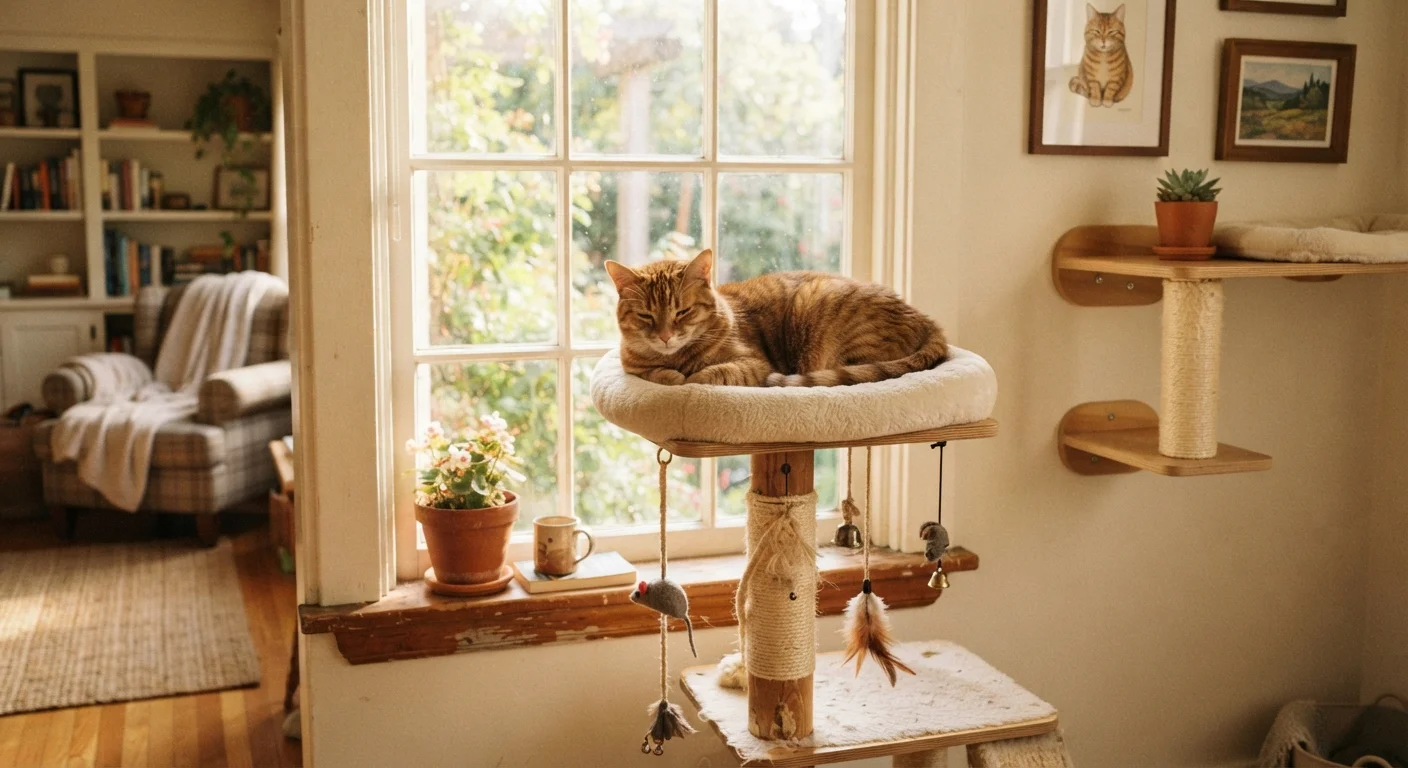
A second common gap is ignoring vertical space. Cats are natural climbers and feel safer when they can survey a room from above. A single floor-level bed does not substitute for a shelf, cat tree, or window perch at mid-height or higher.
Watch for signs that enrichment is insufficient
Overgrooming to the point of hair loss, unprovoked aggression, excessive vocalization at night, and persistent hiding are behavioral signals that a cat's environment is not meeting its needs. These can also indicate an underlying medical issue, so consult a veterinarian before attributing them solely to boredom. Adjusting the environment is one part of the response, not the entire solution.
For a broader view of how the indoor environment affects long-term health, see how lifestyle shapes long-term health risks for dogs and cats. You can also pair this checklist with the monthly pet health checklist to track physical wellness alongside enrichment.