

Key Takeaways
- Indoor cats need a diet matched to their actual activity level to avoid obesity.
- Routine veterinary checkups matter even when a cat appears healthy and stays inside.
- Mental stimulation and physical activity are just as important as food and water.
- Litter box hygiene directly affects a cat's willingness to use it and overall stress levels.
- Social interaction, whether with people or other animals, supports emotional wellbeing.
Indoor cat health
Indoor cat health refers to the full set of physical and behavioral conditions that allow a cat living exclusively inside a home to stay well over its lifetime. It covers nutrition, veterinary care, exercise, mental stimulation, and access to a safe, clean environment. Because indoor cats do not roam, hunt, or face the same stressors as outdoor cats, their needs must be intentionally built into daily home life.
Indoor confinement eliminates many parasite and injury risks but introduces others, including obesity, muscle atrophy, and stress-related behavior problems, all of which are preventable with appropriate management.
Nutrition that matches an indoor lifestyle
Indoor cats burn fewer calories than cats with outdoor access, so their diet needs to reflect that. Feeding portions calibrated for a less active animal helps prevent the weight gain that is common in indoor cats and that can contribute to diabetes, joint problems, and shortened lifespan.
Cats are obligate carnivores, meaning they require animal-sourced protein and specific nutrients, including taurine and arachidonic acid, that they cannot produce on their own. A diet labeled "complete and balanced" by the Association of American Feed Control Officials (AAFCO) meets baseline requirements. Whether you choose wet food, dry food, or a combination, portion control and consistent meal times matter more than format alone.
Fresh water available at all times is non-negotiable. Many cats prefer moving water, and a pet fountain can increase daily intake, which supports kidney health over time. For guidance on what healthy looks like day to day, coat condition and bathroom habits are among the clearest indicators.
Adjust portions as your cat ages
Caloric needs change at different life stages. Kittens, adults, and senior cats have different requirements, and many standard feeding guides on packaging are based on average weights that may not match your cat. Ask your veterinarian for a specific caloric target if your cat is gaining or losing weight without an obvious cause.
Veterinary care that does not wait for symptoms
Many indoor cat owners skip annual vet visits because their cat seems fine. The problem is that cats are adept at masking discomfort, and many conditions, including dental disease, hyperthyroidism, and early kidney disease, develop gradually without obvious signs. Annual physical exams give a veterinarian a chance to detect these changes before they become serious.
Dental health is one of the most frequently neglected areas. Periodontal disease affects a significant proportion of cats by middle age and can contribute to systemic health problems if bacteria enter the bloodstream. Regular tooth brushing or veterinarian-recommended dental care products can reduce this risk.
Parasite prevention is still relevant indoors. Fleas can enter on clothing, and indoor cats are not immune to intestinal parasites. Your veterinarian can advise on appropriate prevention based on your cat's specific situation.
Physical activity and mental stimulation
Without the natural activity that comes from outdoor exploration, indoor cats need owners to build movement and mental engagement into their day. A sedentary cat is at higher risk for obesity and may develop behavior problems tied to frustration or boredom.
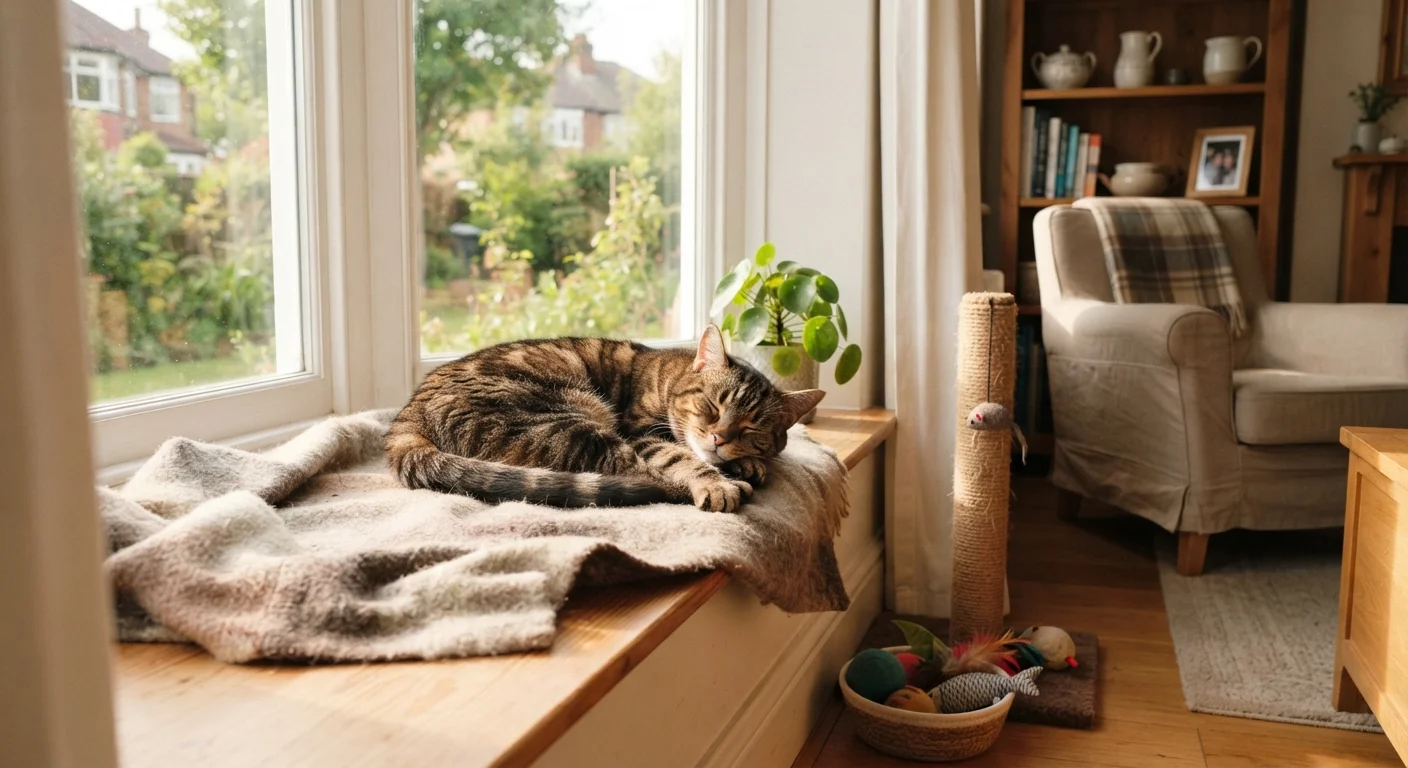
Structured play sessions using wand toys, feather attachments, or puzzle feeders give cats an outlet for predatory behavior. Rotating toys regularly keeps the environment feeling less predictable. Vertical space, such as cat trees and shelving, lets cats climb, survey their territory, and rest at height, all of which are instinctive feline preferences.
The indoor cat enrichment checklist covers specific ways to build activity and variety into a cat's daily environment. For cats showing disruptive or anxious behavior, behavior-focused resources can help owners identify the root cause and adjust accordingly.
Window access counts as enrichment
A perch near a window with a view of birds, traffic, or even passing pedestrians gives an indoor cat passive visual and auditory stimulation throughout the day. This requires no owner participation and costs nothing beyond a stable perch. Bird feeders placed outside a window can meaningfully increase the amount of time a cat spends engaged with its environment.
Litter box setup and hygiene
A cat that avoids its litter box is often communicating something specific: the box is too dirty, too small, in the wrong location, or has the wrong substrate. Inappropriate elimination is one of the most common reasons cats are surrendered to shelters, and in most cases it is preventable.
Boxes should be scooped at least once daily. A cat that is forced to use a dirty box may begin eliminating elsewhere or develop urinary issues from suppressing urination. The box itself should be large enough for the cat to turn around comfortably, unscented litter is generally preferred, and placement away from food and water bowls is important. Multi-cat households need enough boxes that no single cat can be blocked by another.
Social and emotional wellbeing
Cats are often described as solitary, but most domestic cats form genuine attachments to their people and benefit from regular interaction. Daily handling, play, and quiet time near their owner supports emotional stability. Cats that spend long hours alone without any stimulation may develop anxiety-related behaviors over time.
Environmental predictability also matters. Cats generally tolerate change less well than dogs do, and disruptions to routine, such as new people, rearranged furniture, or a new pet, can cause stress. Gradual introductions and consistent daily schedules help cats feel secure.
Owners of aging cats should be aware that emotional and physical needs shift over time. The article on keeping an older cat comfortable covers how to adjust care as mobility, appetite, and social behavior change with age.
This article is for informational purposes only and is not a substitute for professional veterinary advice.