

Key Takeaways
- Cats are generally considered senior at age 11 and may need more frequent vet checkups.
- Joint stiffness, weight changes, and altered thirst are common age-related shifts to monitor.
- Diet adjustments, litter box accessibility, and resting spot comfort matter more as cats age.
- Pain in cats is often subtle; behavioral changes can be the clearest early signal.
- A veterinarian should guide any changes to food, supplements, or medication for older cats.
When a cat becomes a senior
Veterinary guidelines generally classify cats as senior around age 11, though some organizations use age 7 as the start of a "mature" phase. Either way, the body changes well before a cat looks old. Metabolism slows, immune function shifts, and organ systems that once ran quietly start to require more attention.
These changes do not happen overnight, and many cats stay active and comfortable well into their teens with the right support. Knowing what to expect makes it easier to spot problems early and adjust care before small issues grow larger. For a broader look at what cats need at every life stage, see nutritional needs by life stage.
Physical changes to watch for
Older cats commonly experience muscle loss even when their appetite seems stable. A cat may maintain its weight while losing lean mass because body fat increases to compensate. Weighing your cat monthly at home or at the vet gives a clearer picture than visual inspection alone.
Thirst and urination patterns often shift with age. Drinking more water than usual can signal kidney disease, hyperthyroidism, or diabetes, all of which are more common in older cats. Drinking less may indicate nausea or pain. Either change deserves a vet conversation.
Joint stiffness is another frequent issue. A cat that used to leap onto the counter without hesitation may hesitate, miss the jump, or avoid it entirely. This reluctance is often the first visible sign of arthritis rather than any obvious limping. Cats hide discomfort well, so learn the subtle signs your cat may be in pain and act on them early.
30-40%
Older cats affected by chronic kidney disease
Veterinary studies estimate that chronic kidney disease affects between 30 and 40 percent of cats over age 15.
90%
Cats over 12 with arthritis on imaging
Research published in the Journal of Feline Medicine and Surgery found radiographic signs of arthritis in approximately 90 percent of cats over age 12.
Adjusting diet for an aging cat
Senior cats often need more protein, not less, to preserve muscle mass. A common misconception is that older cats should automatically go on a low-protein diet. Unless a veterinarian has identified a specific kidney condition that requires protein restriction, higher-quality protein generally supports better muscle retention.
Moisture content matters more with age too. Many older cats do not drink enough water on their own, and wet food helps maintain hydration and supports kidney health. If you need to shift your cat's diet, a gradual transition reduces digestive upset. The guide to switching pet food safely outlines a practical schedule for making that change.
Calorie needs can go either direction with age. Some cats lose weight due to decreased appetite or absorption issues; others gain weight as activity drops. Neither extreme is normal, and both warrant a vet assessment rather than a self-directed fix.
Home environment adjustments
Small changes to your home can meaningfully improve comfort for a stiff or slower-moving cat. Litter boxes with low entry sides allow cats with sore joints to step in without strain. A box that once worked fine may now be a barrier if the sides are high or the location requires climbing stairs.
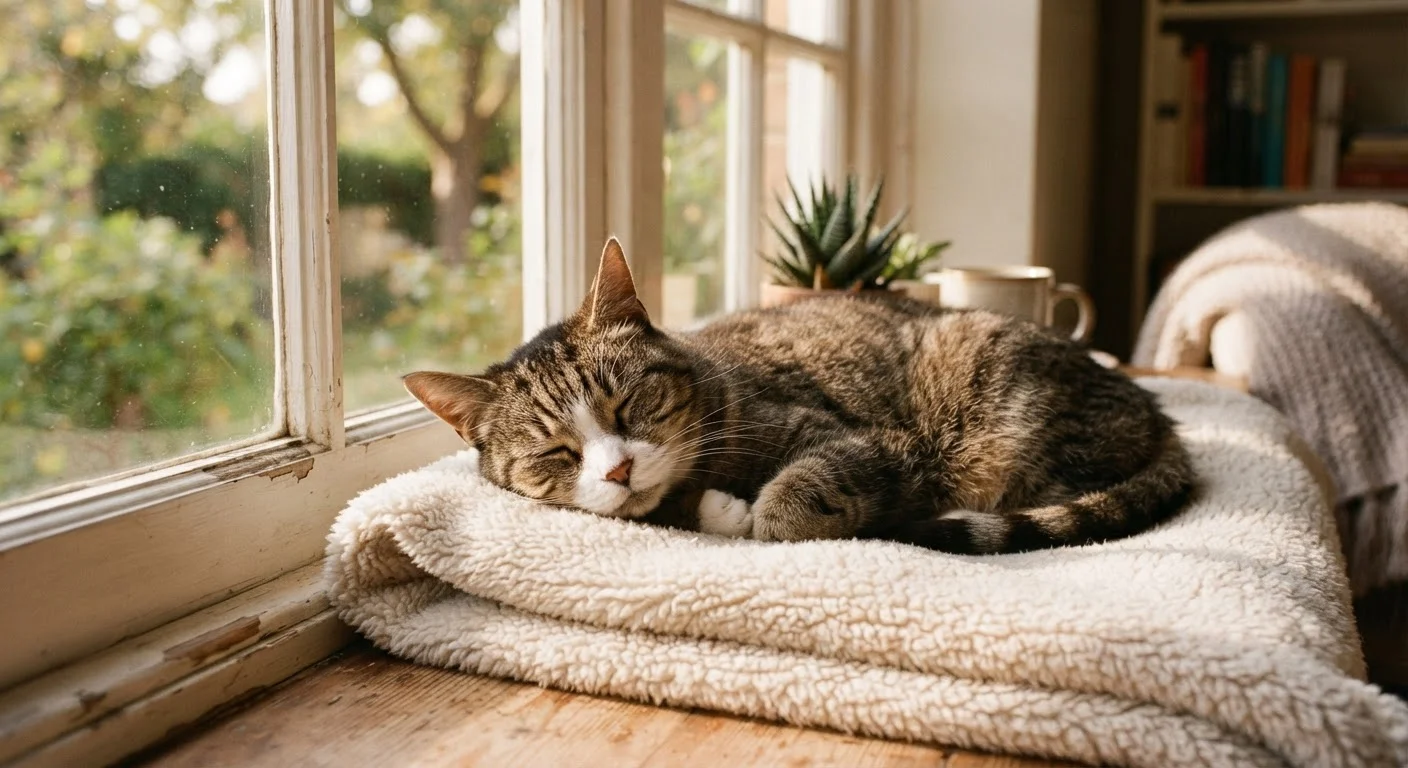
Resting spots also deserve attention. Older cats often spend more time sleeping and gravitate toward warmth. A bed placed at floor level removes the need to jump. Heated orthopedic pads made for pets can help cats with arthritis stay comfortable, though you should confirm with your vet that a warming product is appropriate before using one.
Food and water bowls placed at a slight elevation can reduce neck strain for cats with stiffness in their upper spine. These changes cost little effort but can noticeably affect a cat's willingness to eat and drink. For a full picture of what indoor cats need day to day, see what cats actually need to stay healthy indoors.
Vet care as cats age
Most veterinarians recommend moving senior cats to twice-yearly wellness visits rather than once a year. A lot can change in six months for an older cat, and bloodwork done at each visit allows trends to surface before they become emergencies. Kidney values, thyroid levels, and blood pressure are among the measurements that shift gradually and respond better to early intervention.
Dental health also tends to worsen with age. Painful teeth can cause a cat to eat less or change how it chews, which affects nutrition and weight. A vet examination is the only reliable way to assess what is happening in the mouth, since many cats tolerate dental disease without any visible distress until it is advanced.
General wellness information and preventive care resources are organized under pet health and wellness, which covers a range of topics relevant to aging pets.
This article is for informational purposes only and does not substitute for professional veterinary advice. Consult a licensed veterinarian before making changes to your cat's diet, medication, or care routine.