

Key Takeaways
- Match the pet to your schedule and space before you commit: daily time requirements vary widely between species.
- Set up the full habitat before bringing your pet home so it can settle in without disruption.
- Small pets have specific nutritional needs; a general pet food approach is rarely appropriate.
- The first two weeks should focus on letting the animal adjust, not on socializing or handling.
- Find an exotic or small-animal vet before you need one: many general practices do not see rabbits or birds.
Start here
Choosing the right small pet for your lifestyle
Next
Setting up the habitat before your pet arrives
Then
Nutrition basics for small pets
When you're ready
The first two weeks at home
Ongoing
Health monitoring and vet care
Choosing the right small pet for your lifestyle
Small pets include rabbits, guinea pigs, hamsters, gerbils, rats, ferrets, and a wide range of bird species. The differences between them in daily time commitment, space, noise level, and social needs are substantial. A hamster is largely nocturnal and solitary. A parrot may need several hours of interaction daily and can live for decades. A rabbit requires a large enclosure, hay-based feeding, and ideally a bonded companion.
Before choosing, map out your daily schedule honestly. Some species tolerate owners who are away most of the day; others develop behavioral problems without regular contact. Consider who will care for the pet when you travel, and whether anyone in the household has allergies to hay, dander, or feathers.
If you are used to dogs or cats, the article on setting up for a first cat gives a useful contrast: small pets have narrower environmental tolerances and often require more specialist knowledge, despite their size.
Setting up the habitat before your pet arrives
The habitat should be fully assembled and stable before the animal comes home. Introducing a pet to a half-finished space adds unnecessary stress at an already disorienting moment.
Space requirements are often larger than packaging suggests. A rabbit, for example, needs a minimum of 12 square feet of living space, and more for exercise. Birds need cages wide enough to allow wing extension and flight between perches. For detailed guidance on bird-specific setup, the article on building a safe home for a pet bird covers cage dimensions, perch variety, and air quality in depth.
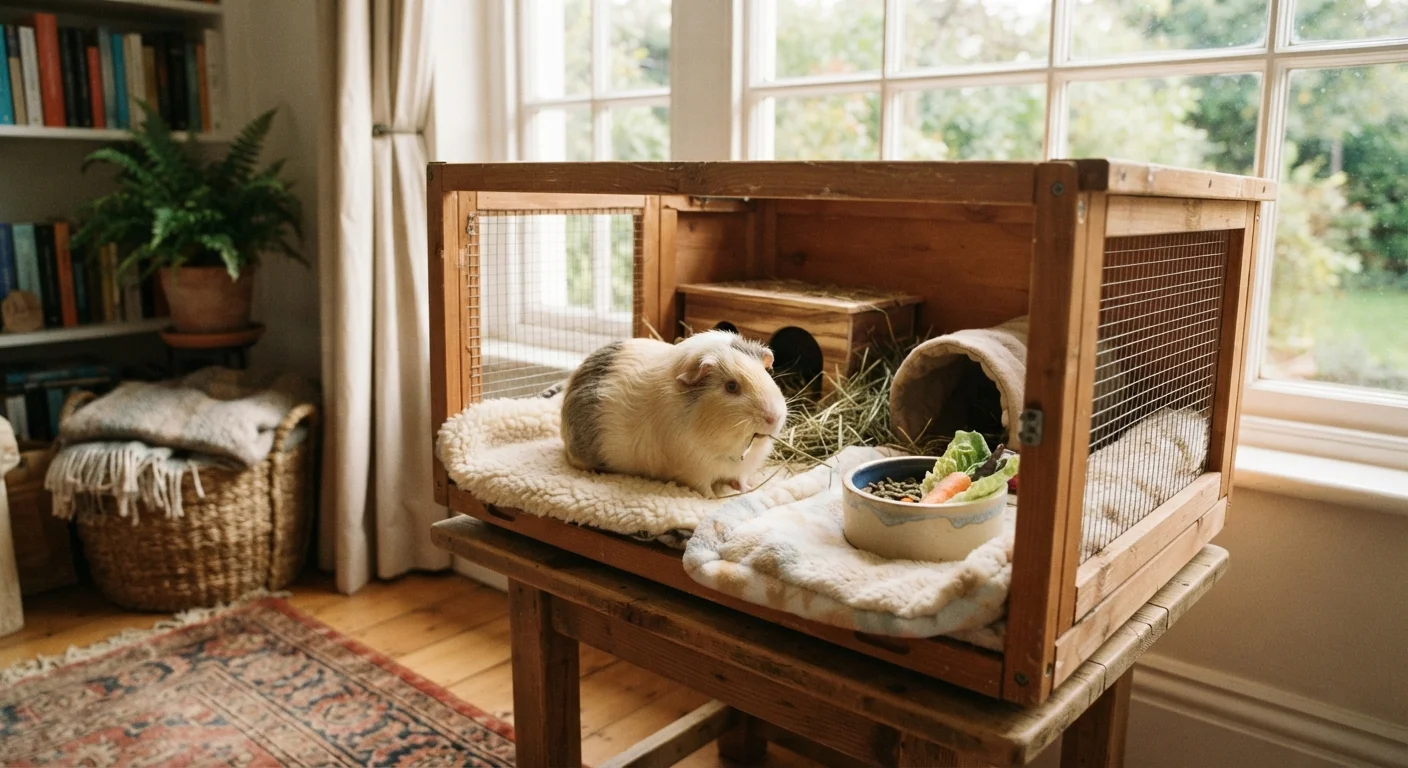
Place the habitat away from direct sunlight, drafts, and high-traffic areas. Small animals are sensitive to temperature swings and to the chronic low-level stress of constant human movement nearby. Provide at least one enclosed hiding spot so the animal can retreat when it feels threatened. This is a basic welfare need, not an optional accessory.
Nutrition basics for small pets
Feeding requirements vary by species and cannot be generalized. Rabbits and guinea pigs are herbivores whose digestive systems depend on unlimited grass hay. Guinea pigs cannot synthesize vitamin C and need fresh vegetables or a reliable dietary source daily. Hamsters are omnivores and need some protein. Parrots and other psittacines require species-appropriate pellets, fresh vegetables, and limited fruit; seed-only diets are nutritionally incomplete for most parrot species.
Treats should be a small fraction of the diet. Many commercial treat products marketed for small pets are high in sugar and low in nutritional value.
For guinea pigs specifically, nutritional needs also change as the animal ages. The guide on guinea pig nutrition across life stages covers those shifts in detail. For a broader introduction to how pet nutrition works, this plain-language nutrition overview is a good starting point for any new owner.
Read the ingredient list, not the label
Marketing language on small-pet food packaging is not regulated the same way human food labels are. Check the ingredient list directly: hay, leafy greens, or species-appropriate pellets should appear at the top. If sugar, corn syrup, or artificial coloring appear early in the list, the product is not a good daily staple.
The first two weeks at home
Most new owners want to interact with their pet immediately. For prey species, this impulse can backfire. Rabbits, guinea pigs, and many bird species arrive already stressed from transport and a change in environment. The priority for the first several days is quiet and routine, not socialization.
Keep the habitat in a calm area. Maintain consistent feeding times. Avoid picking the animal up more than necessary, and never force interaction. Let the pet approach you rather than reaching in. Offering food by hand during this period builds positive association at the animal's pace.
Watch for normal behavior returning as a sign of adjustment: foraging, grooming, vocalizing, and exploring. Loss of appetite beyond 24 hours, labored breathing, or discharge from the eyes or nose warrant a vet call without delay.
Health monitoring and vet care
Many general veterinary practices do not see rabbits, guinea pigs, birds, or ferrets. Finding a vet who specializes in exotic or small animals before your pet arrives is not optional. In an emergency, you will not have time to search.
Schedule a new-pet wellness visit within the first few weeks. The vet can confirm the animal is a healthy weight, check teeth (dental problems are common in rabbits and guinea pigs), and answer diet or housing questions specific to your setup.
At home, check your pet daily. Changes in eating, drinking, stool consistency, coat or feather condition, and activity level are all early indicators of a problem. Small animals metabolize quickly; illness that seems minor can progress fast.
This article is for informational purposes only and does not substitute for advice from a licensed veterinarian familiar with your specific animal.