

Key Takeaways
- Guinea pigs cannot produce their own vitamin C and require dietary sources at every life stage.
- Young and pregnant guinea pigs need higher calcium and protein than healthy adults.
- Unlimited timothy hay should be the foundation of every adult guinea pig's diet.
- Senior cavies may need softer foods and more frequent veterinary weight checks.
- Pellets formulated for guinea pigs differ meaningfully from those made for rabbits or hamsters.
Why nutrition changes across a guinea pig's life
A guinea pig's body has different demands at 4 weeks, 2 years, and 5 years. Growth, reproduction, and aging all alter how nutrients are absorbed and used. Feeding the same diet from birth to old age misses those shifts and can contribute to problems like bladder sludge in adults or stunted growth in pups.
Understanding the stages helps owners make practical adjustments rather than overhauling everything at once. The core building blocks stay the same: unlimited grass hay, fresh vegetables with vitamin C, and a measured amount of species-appropriate pellets. What changes is the ratio, the calcium level, and how much protein is appropriate. For a broader look at how life stage affects pet diets generally, see what nutrients matter most at each life stage.
Newborns and nursing pups (birth to 3 weeks)
Guinea pig pups are born fully furred and with their eyes open, which means they begin sampling solid food within hours of birth. Nursing continues for about three weeks, but pups start nibbling hay and soft vegetables almost immediately. This early solid food intake is normal and should be encouraged rather than restricted.
The mother's milk is high in fat and protein. Alongside it, pups benefit from access to the same hay and leafy greens available to the mother. Alfalfa hay is appropriate at this stage because its higher calcium and protein content supports rapid bone and tissue development. Do not restrict pellets for nursing females; their caloric needs are elevated.
If a pup is orphaned before three weeks, consult an exotic animal veterinarian. Cow's milk and most commercial formulas are not suitable substitutes for guinea pig milk, and hand-rearing very young pups carries real risk.
Start solid food access early for pups
Place a small pile of hay directly on the cage floor where nursing pups can reach it from the first day. Young pups learn to eat by mimicking the mother, so keeping her diet visible and accessible speeds up the solid food transition. Avoid any vegetables high in water content (such as cucumber) in the first week, as pups' digestive systems are still developing.
Juveniles (3 weeks to 6 months)
After weaning, young guinea pigs grow quickly. Alfalfa hay remains the better choice over timothy at this stage because the calcium supports skeletal development. Pellets formulated specifically for guinea pigs (not rabbits, not mixed small animal blends) can be offered without strict rationing since juveniles need the calories and nutrients for growth.
Fresh vegetables matter from the start. Introduce them one at a time to identify any that cause loose stools. Bell pepper, romaine lettuce, and cilantro are good starting points because they are palatable and provide vitamin C without excess oxalic acid.
This is also the period when feeding habits are established. Guinea pigs that never encounter variety in their first months can become resistant to new foods as adults. Offering several different leafy greens during the juvenile phase makes dietary adjustment easier later. New owners setting up routines at this stage will find common first-month mistakes worth reviewing before habits become entrenched.
Adults (6 months to 4 years)
At six months, the growth phase ends and calcium requirements drop. Switch from alfalfa hay to timothy, orchard grass, or meadow hay. High-calcium hays fed long-term to adult guinea pigs are associated with urinary calcium deposits, sometimes called bladder sludge, which cause discomfort and may require veterinary treatment.
Pellets should be measured at this stage: approximately one to two tablespoons per day per guinea pig is a common guideline, though exact amounts depend on the individual animal's weight and activity. Overfeeding pellets at the expense of hay is one of the more frequent adult dietary errors.
80%+
Diet that should be grass hay for adults
Veterinary small animal husbandry guidelines consistently recommend hay as the dominant dietary component for adult guinea pigs, with pellets and vegetables as supplements.
10-30 mg
Estimated daily vitamin C requirement per guinea pig
The National Research Council has published estimated daily vitamin C needs for guinea pigs in the range of 10 mg for maintenance, rising to around 30 mg during pregnancy or illness.
4-7 years
Typical guinea pig lifespan
Well-cared-for domestic guinea pigs commonly live between four and seven years, with diet quality considered a significant factor in reaching the upper end of that range.
Fresh vegetables remain essential for vitamin C. Aim for roughly one cup of mixed leafy greens daily per guinea pig. Rotate the selection so no single high-oxalate vegetable (such as spinach or parsley) dominates every day.
Fruits can be offered in small amounts as occasional treats. Their sugar content means they are not a daily food for adults.
Senior guinea pigs (4 years and older)
Guinea pigs typically live four to seven years, and the years after four bring gradual changes in digestion, dental health, and muscle mass. Weight loss in a senior cavy often goes unnoticed because fur hides it. Weighing your guinea pig weekly with a kitchen scale and logging the results makes it much easier to catch a downward trend early.
Dental problems are common in older guinea pigs. Molars that overgrow or misalign make chewing painful, which reduces hay intake. If a senior pig stops eating hay or loses weight rapidly, a veterinary dental exam is warranted. Softer leafy greens and moistened pellets can help bridge the gap during recovery from dental work, but hay should return to the diet as quickly as possible because it is what keeps teeth worn correctly.
Some senior guinea pigs benefit from slightly increased pellet portions if they struggle to maintain weight, but this should be guided by a veterinarian rather than assumed. The shift in care philosophy for older small pets parallels what owners of senior cats experience: see what changes with age in senior pet care for useful context on monitoring aging animals.
Vitamin C: the non-negotiable nutrient at every age
Guinea pigs share with humans and some other primates an inability to synthesize vitamin C internally. Without a consistent dietary source, they develop scurvy, which causes joint pain, poor wound healing, and eventually death. This applies equally to pups, adults, and seniors.
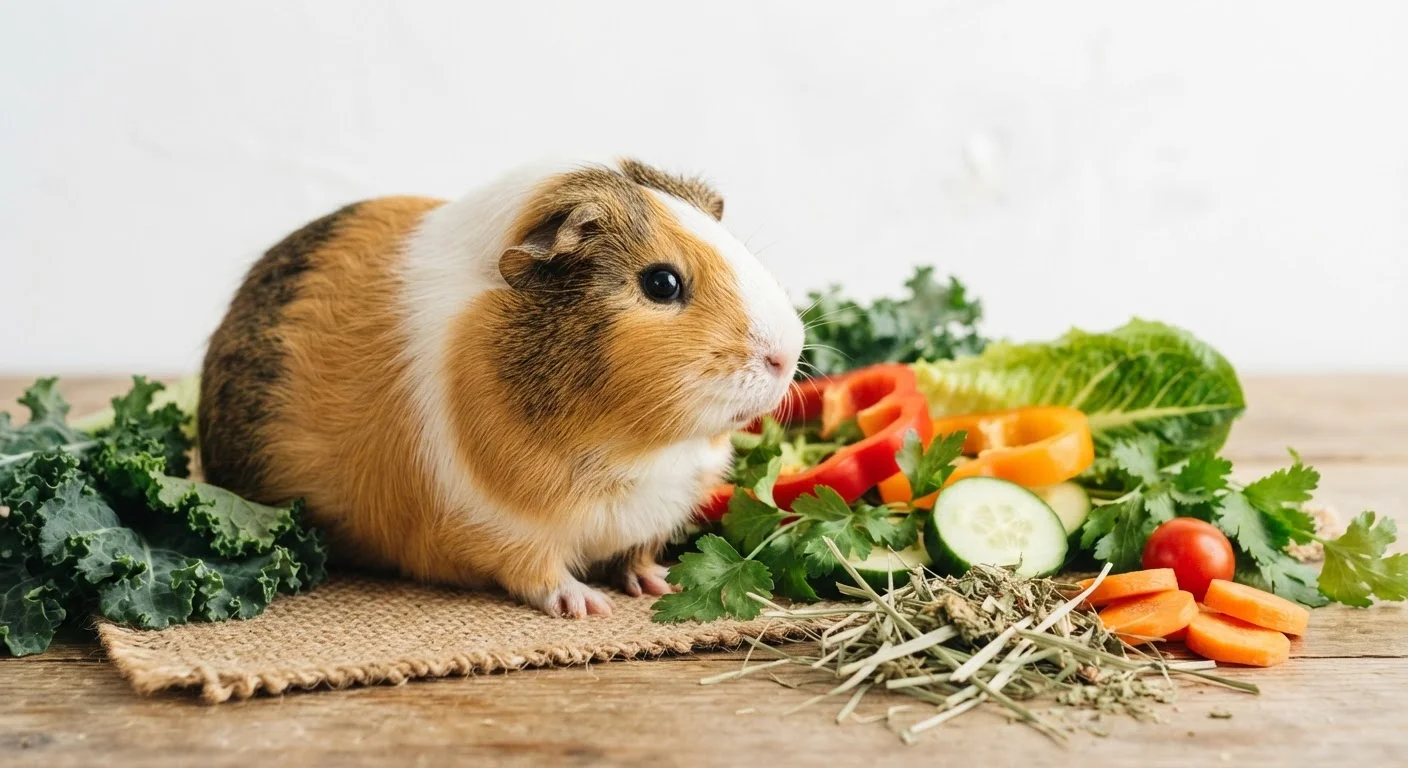
Fresh vegetables are the most reliable delivery method. Bell peppers (all colors) and leafy greens such as kale and romaine provide meaningful amounts. Vitamin C degrades quickly once cut, so serve vegetables the same day they are prepared.
Water-soluble vitamin C drops added to a water bottle are less reliable than food sources because the vitamin breaks down when exposed to light and water within hours. If supplements are needed, a plain chewable tablet placed directly in the mouth or hidden in a piece of pepper is more dependable than a medicated water bottle.
Pellets that claim added vitamin C lose most of it within a few weeks of bag opening, so pellets alone are not a safe vitamin C strategy. For a complete introduction to meeting a new guinea pig's needs from the start, a practical starter guide for new small pet owners covers the early setup in detail.
This article is for informational purposes only and is not a substitute for advice from a qualified exotic animal veterinarian.