

Key Takeaways
- Avocado contains persin, a compound that is genuinely toxic to most pet bird species.
- Seeds alone do not meet a bird's full nutritional needs and can lead to deficiencies over time.
- Several common household foods, including onion, chocolate, and caffeine, are dangerous to birds.
- Fresh vegetables and leafy greens are safe and beneficial for most pet birds in reasonable portions.
- Fruit can be offered to birds, but high-sugar fruits should be given sparingly.
Why bird nutrition myths persist
Birds are often assumed to be simple pets with simple diets. That assumption leads many owners to feed based on guesswork, habit, or advice passed down from other hobbyists rather than from avian veterinary guidance. The result is a surprising number of widely repeated beliefs about bird food that range from slightly off to genuinely harmful.
Understanding which foods are safe and which are dangerous matters more for birds than for some other pets, partly because birds are small and partly because their digestive systems differ significantly from mammals. A dose that seems trivial to a human can be lethal to a parakeet or cockatiel. See our pet nutrition guide for broader context on companion animal diets, and read on for the specific myths that affect bird owners most.
Common myths and the facts behind them
The following myth-fact pairs address the misconceptions avian veterinarians most often encounter. Each one has a real impact on bird health when left uncorrected.
Myth
Seeds are a complete and natural diet for pet birds, so a bowl of mixed seeds is all they need.
Fact
Seeds are high in fat and low in several vitamins and minerals. A seed-only diet leads to deficiencies in vitamin A, calcium, and other nutrients over time.
Wild birds eat seeds as part of a varied diet that also includes insects, fruit, flowers, and plant matter. The seeds sold in commercial mixes tend to be higher in fat than what wild birds typically consume. Parrots, cockatiels, and budgerigars fed exclusively on seeds commonly develop vitamin A deficiency, which shows up as respiratory problems, poor feather condition, and immune weakness. Pellets formulated for the specific species are considered a more nutritionally complete base by most avian veterinarians.
Myth
Avocado is fine for birds in small amounts, just like it is for most pets.
Fact
Avocado contains persin, a fungicidal toxin found in the fruit, skin, pit, and leaves. Even small quantities can cause cardiac distress and death in many bird species.
Persin affects birds differently than it does humans, who are largely resistant to it. In birds, persin can cause weakness, difficulty breathing, fluid accumulation around the heart and lungs, and can be fatal within one to two days of ingestion. There is no established safe dose for birds, so avocado in any form should be kept entirely away from them. This includes guacamole and any prepared food containing avocado.
Myth
Fruit is too sugary for birds and should be avoided entirely.
Fact
Most fruit is safe for pet birds and provides useful vitamins and antioxidants. The concern is portion size, not fruit itself.
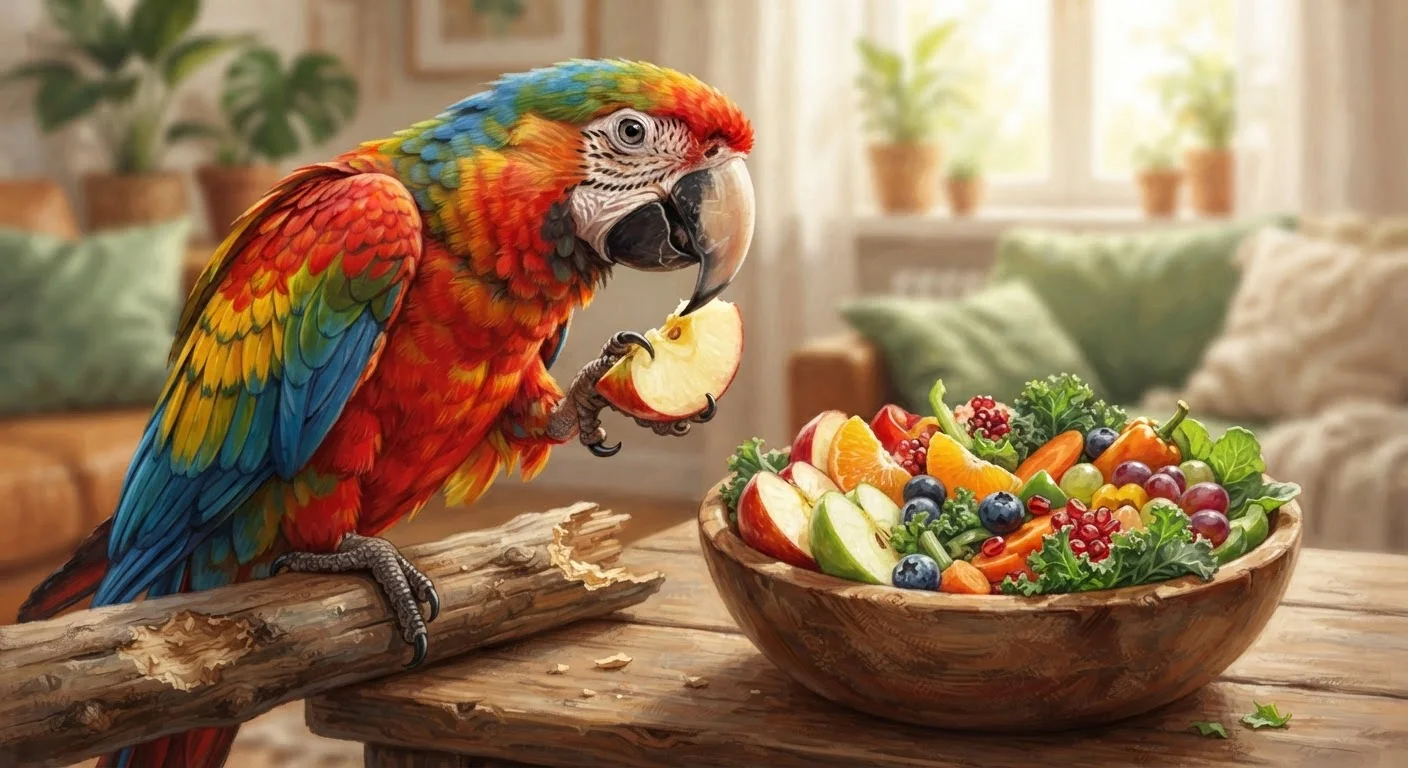
Berries, melon, papaya, mango, and apple (with seeds removed) are commonly offered to pet birds without issue. The seeds and pits of apples, cherries, peaches, and apricots do contain compounds that can release cyanide, so those parts should always be removed before offering the fruit. High-sugar fruits like grapes can be given occasionally rather than daily. Fruit should make up a small share of the overall diet rather than the majority, but cutting it out entirely removes a useful source of vitamins and enrichment.
Myth
Onion and garlic are harmless kitchen scraps that birds can eat safely.
Fact
Onion and garlic contain compounds that damage red blood cells in birds, potentially causing hemolytic anemia.
Both raw and cooked onion and garlic contain organosulfur compounds that can break down red blood cells in birds. The result is a condition called hemolytic anemia, which can be severe. Powdered forms of onion and garlic are particularly concentrated and therefore more dangerous per gram. Any dish that contains onion or garlic, including soups, sauces, and seasoned grains, should be kept away from birds. A broader list of human foods dangerous to pets covers similar risks across multiple species.
Myth
Chocolate is only dangerous to dogs and cats, not birds.
Fact
Chocolate contains theobromine and caffeine, both of which are toxic to birds. Even small amounts can cause serious harm.
Theobromine is metabolized slowly by birds, allowing it to build to toxic levels quickly. Symptoms of chocolate ingestion in birds include vomiting, tremors, seizures, and cardiac arrhythmia. Dark chocolate and baking chocolate carry higher theobromine concentrations than milk chocolate, but no form of chocolate is safe for birds. Caffeine from coffee, tea, and energy drinks carries similar risks and should also be kept out of reach.
Myth
Birds can eat anything that is not on a specific 'toxic foods' list.
Fact
The absence of a food from a published list does not make it safe. Some foods are harmful in ways that are not yet fully documented, and preparation method matters too.
Salt is a good example. Birds have low tolerance for sodium, and salty snack foods like chips or crackers can disrupt electrolyte balance even in small quantities. Heavily processed human food, anything fried or seasoned with spices, and foods containing artificial sweeteners such as xylitol all carry risk. When in doubt about a specific food, consulting an avian veterinarian is the practical approach rather than assuming safety. Common pet health myths that veterinarians debunk addresses similar reasoning gaps across other species.
What a balanced bird diet actually looks like
Contrary to the image on most commercial seed packaging, seeds are a supplement, not a complete diet. Most avian veterinary organizations recommend that pellets formulated for the specific bird species make up the largest share of the daily diet, typically around 60 to 70 percent, with fresh vegetables, leafy greens, and a small amount of fruit filling out the rest.
Dark leafy greens such as kale, romaine, and dandelion greens are nutrient-dense and safe for most species. Cooked legumes, whole grains, and small amounts of egg can add protein variety. If you are transitioning a bird that has only eaten seeds, the process takes patience. Many birds resist new foods at first, and gradual introduction alongside familiar foods tends to work better than an abrupt switch.
For species-specific guidance, the parakeet diet debate article covers the seed versus pellet question in depth. Changes in eating habits can also signal illness, so learning the signs your bird may be sick is useful alongside any dietary review.
This article is for informational purposes only. Consult a qualified avian veterinarian before making significant changes to your bird's diet or if you suspect your bird has ingested a toxic substance.