

Key Takeaways
- Seed-only diets are a common cause of vitamin A and calcium deficiency in pet parakeets.
- Formulated pellets are designed to meet a parakeet's full nutritional needs in each bite.
- Many avian veterinarians recommend pellets as the dietary base, with seeds as an occasional supplement.
- Transitioning a seed-addicted bird to pellets takes patience and can require several weeks.
- Fresh vegetables and leafy greens benefit parakeets regardless of whether they eat seeds or pellets.
Option A
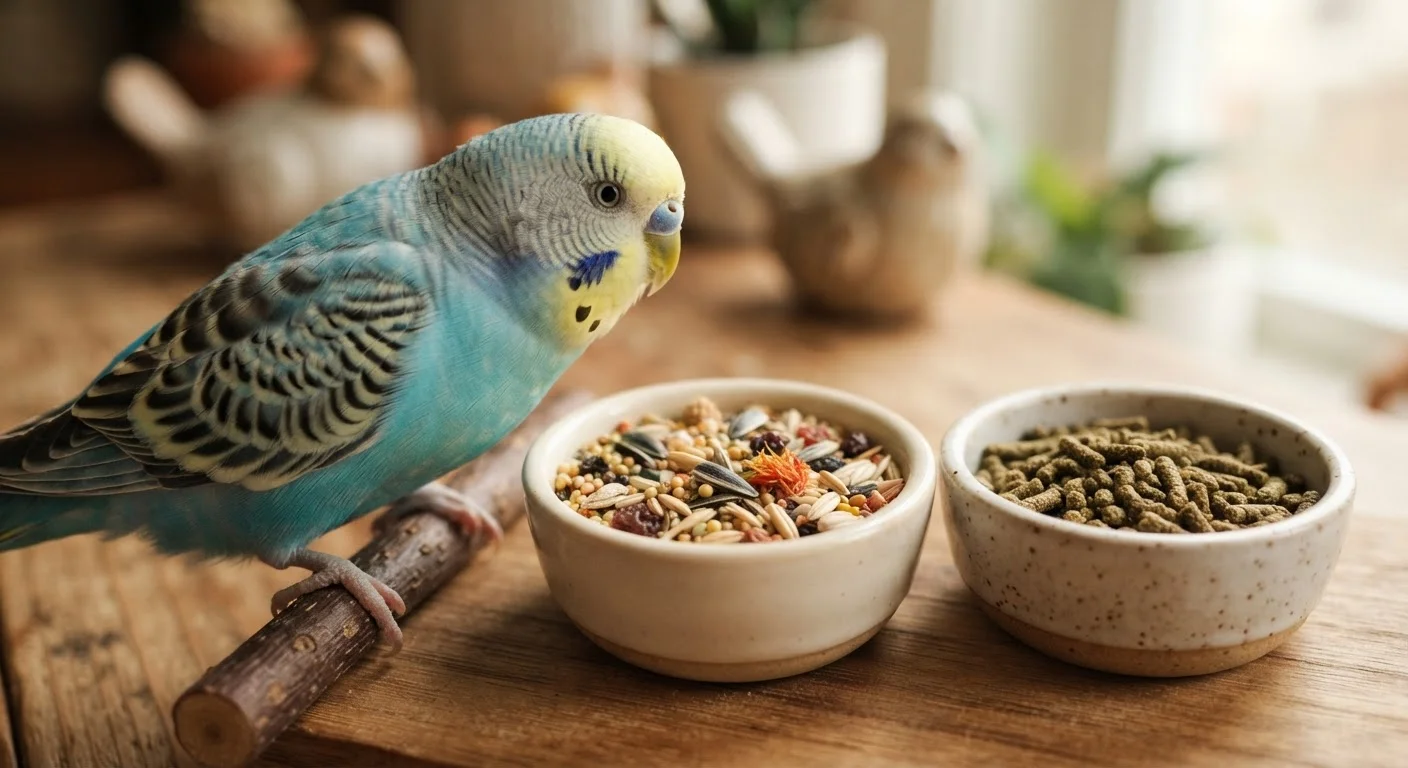
Seed mixes
The traditional, instinct-driven staple.
Best for: Owners who want to offer foraging variety and are prepared to supplement with other foods to fill nutritional gaps.
Option B
Formulated pellets
The nutritionally complete, consistent option.
Best for: Owners who want a single food source that covers most of a parakeet's daily nutritional requirements without guesswork.
If your parakeet has been eating seeds its whole life
Formulated pellets (with a gradual transition)
A slow switch to pellets, guided by an avian vet, addresses the nutritional shortfalls that long-term seed diets create.
If you want the simplest path to complete daily nutrition
Formulated pellets
Pellets are formulated so that every piece contains a consistent nutrient profile, removing the risk of selective eating.
If enrichment and foraging behavior matter to you
Seed mixes (as a supplement, not a staple)
A small amount of seed encourages natural foraging activity, provided the bulk of the diet is already nutritionally balanced.
If you are setting up a diet for a newly acquired young parakeet
Formulated pellets
Young birds introduced to pellets early accept them more readily and build sound nutritional habits from the start.
Why the seed vs. pellet question matters
Walk into any pet store and you will find rows of colorful seed mixes marketed for parakeets (also called budgerigars or budgies). Seeds look natural, birds eat them eagerly, and they are inexpensive. That convenience has made seed mixes the default choice for decades. The problem is that what a bird prefers is not always what it needs.
Parakeets in the wild eat a wide range of grasses, seeds, berries, and plant matter that shifts with the seasons. A store-bought seed mix, typically heavy in millet and sunflower seeds, does not replicate that variety. Formulated pellets were developed specifically to address this gap, and understanding both options clearly helps you make a better decision for your bird. See our full guide to what pet birds can and cannot eat for broader context on bird nutrition.
What seeds actually provide
Seeds contain fat, carbohydrates, and some protein, which makes them calorie-dense and appealing. Parakeets often show a strong preference for seeds because of that fat content. The appeal, though, is also the limitation.
Most seed mixes are deficient in vitamin A, calcium, iodine, and several amino acids that parakeets need for healthy feathers, organ function, and immune response. A parakeet eating seeds as its sole food source is at real risk for fatty liver disease, thyroid problems from iodine deficiency, and chronic vitamin A deficiency, which can affect the respiratory and digestive systems. Parakeets are also selective eaters: they will pick out favorite seeds and leave others, making an already limited mix even less balanced.
| Criterion | Seed mixes | Formulated pellets |
|---|---|---|
| Nutritional completeness | Often deficient in vitamins and minerals | Designed to meet full daily needs |
| Risk of selective eating | High: birds pick favorites | Low: each piece is identical |
| Palatability | Highly appealing to most birds | Variable: some birds resist initially |
| Foraging stimulation | Good: cracking seeds is engaging | Minimal on its own |
| Vitamin A content | Generally low | Included in formulation |
| Fat content | High, especially with sunflower seeds | Controlled and consistent |
| Transition difficulty | N/A (birds already accept seeds) | Can require weeks for seed-fed birds |
Seeds are not without value. In small quantities, they provide enrichment. The act of cracking open a seed engages a bird physically, and the variety of textures in a quality mix supports foraging behavior. That behavioral benefit does not, however, offset the nutritional shortfall when seeds are the majority of the diet.
What formulated pellets provide
Pellets were developed by avian nutritionists to supply a complete and consistent nutrient profile in a single food. Each pellet contains the same blend of vitamins, minerals, protein, fat, and fiber, so a bird cannot selectively eat around the nutrients it needs. That consistency is the main advantage pellets hold over seeds.
Avian veterinary organizations, including the Association of Avian Veterinarians, have broadly recommended pellets as the dietary base for companion parrots and parakeets. A pellet-based diet lowers the risk of the deficiency diseases commonly seen in seed-fed birds.
Fresh water matters regardless of diet
Whether your parakeet eats seeds or pellets, clean fresh water every day is non-negotiable. Pellets can absorb moisture and spoil quickly if they contact a wet dish, so check and replace food and water at least once daily. Birds on high-seed diets may drink less because of the moisture content in some seeds, but they still need constant access to clean water.
Pellets do have drawbacks. Many parakeets, especially those raised on seeds, resist them at first. The transition can take weeks of patient effort. Color-enhanced pellets also contain artificial dyes that some owners prefer to avoid, though plain or naturally colored varieties are widely available. Pellets also do not provide foraging stimulation on their own, which is worth supplementing with fresh foods and foraging toys. See our guide to setting up an enriching home for a pet bird for ideas on pairing diet with environmental enrichment.
Switching a seed-addicted bird to pellets
A parakeet that has eaten seeds for years may treat pellets as foreign objects at first. Abrupt removal of seeds can cause a bird to refuse food entirely, which is dangerous. A gradual approach works better.
Start by placing pellets in the food dish alongside the usual seed mix. Over two to four weeks, slowly reduce the proportion of seeds while increasing pellets. Watch the bird's droppings and body weight throughout: a bird that is not eating will show changes in droppings and may lose condition. Consulting an avian veterinarian before and during the transition is worth the time, particularly if your bird is older or has a known health condition.
Fresh foods can help bridge the gap. Offering small pieces of dark leafy greens such as kale or romaine, along with carrots and cooked sweet potato, gives the bird something appealing to try while it adjusts to pellets. For a broader look at how nutritional trade-offs apply across pet species, our pet nutrition guide covers the topic in detail.
This article is for informational purposes only and does not replace advice from a qualified avian veterinarian. Consult a vet before making significant changes to your parakeet's diet.