

| Primary masking instinct | Birds hide illness as a survival response to predation pressure |
| Key physical warning sign | Persistent fluffed feathers combined with reduced activity |
| Keel bone check | A sharp or prominent keel bone indicates weight and muscle loss |
| Supportive care temperature | 85 to 90 degrees Fahrenheit for a sick bird awaiting vet care |
| Recommended vet type | Avian veterinarian (not a general small-animal practice) |
| Same-day care threshold | Open-mouth breathing, seizures, or inability to perch |
Why birds hide illness
Birds are prey animals by instinct. In the wild, showing weakness invites predation, so a sick bird will often behave as normally as possible for as long as possible. This masking behavior is one of the most difficult challenges for pet bird owners, because by the time visible symptoms appear, the bird may already be significantly unwell.
Understanding this instinct is the starting point for responsible bird ownership. Daily observation, not just weekly check-ins, gives you the baseline you need to notice small deviations early. If you also keep a dog or cat, you may already know how this kind of close watching works. What healthy looks like in everyday pets offers a useful comparison framework for establishing those normal baselines across species.
Avian veterinarian
A veterinarian with specialized training in the diagnosis and treatment of birds. Avian vets are distinct from general small-animal practitioners and have knowledge of bird-specific anatomy, diseases, and drug sensitivities.
Nares
The nostrils of a bird, located at the base of the upper beak. Discharge from the nares is a common sign of respiratory or systemic illness.
Keel bone
The ridge of bone running down the center of a bird's chest, to which the flight muscles attach. The prominence of the keel bone is a practical field indicator of body condition and weight status.
Droppings assessment
Examination of a bird's fecal matter, urates, and urine as a routine health indicator. Normal droppings vary by species and diet, so familiarity with your bird's baseline is necessary to spot changes.
Fluffing
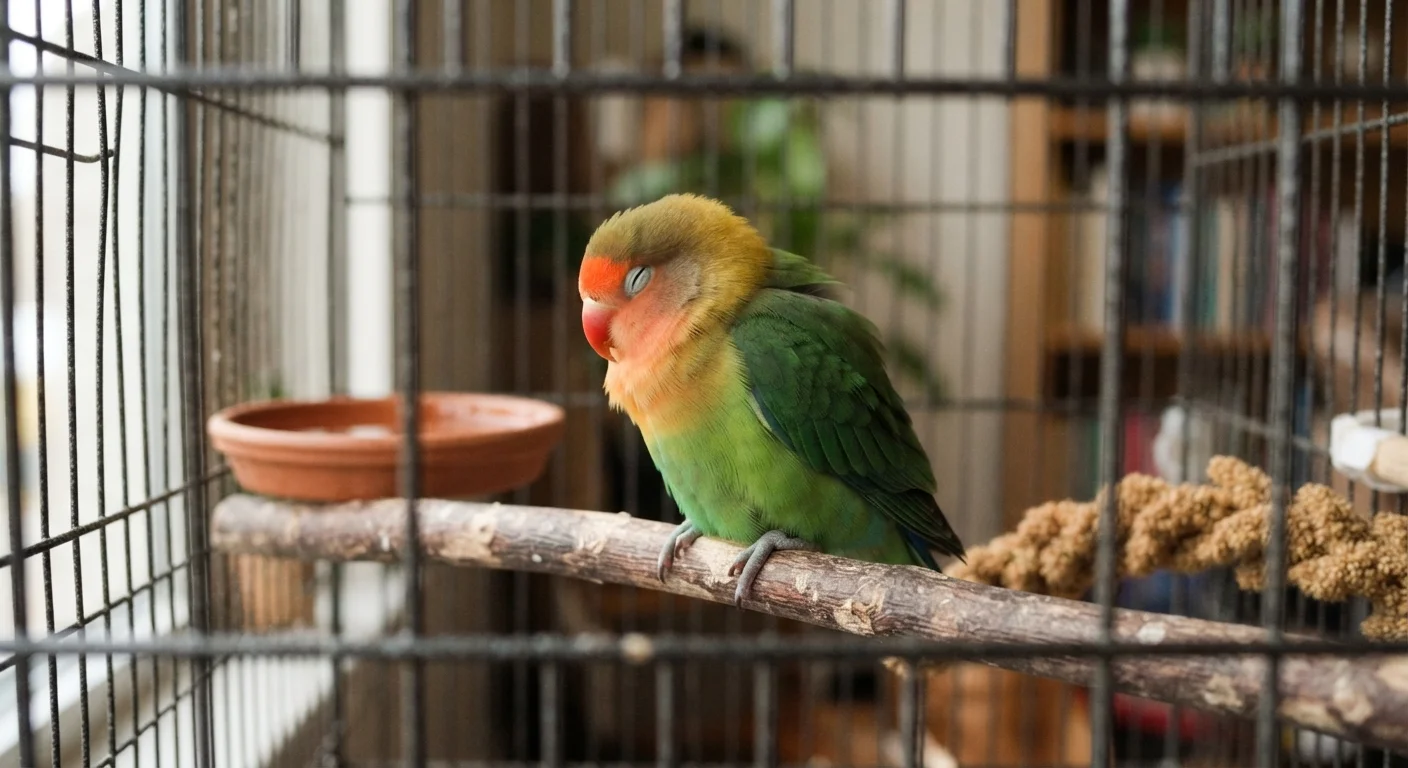
When a bird raises and puffs out its feathers to trap body heat. Brief fluffing during sleep is normal; persistent fluffing while awake is often a sign the bird is cold, ill, or in pain.
Physical signs to watch for
The following physical changes are among the most common early indicators that a bird needs veterinary attention.
- Fluffed feathers outside of normal preening or sleep, held for extended periods, often combined with a hunched posture
- Discharge from the nares (nostrils), eyes, or beak
- Changes in droppings: color, consistency, or volume shifts that persist beyond one or two meals
- Labored or open-mouth breathing, tail bobbing with each breath, or wheezing sounds
- Swelling around the eyes, beak, joints, or abdomen
- Loss of feathers beyond normal molting, or visible damage to feathers the bird has not chewed itself (see also feather destructive behavior for behavioral causes)
- Weight loss, most easily detected by gently feeling the keel bone (the ridge running down the center of the chest)
A prominent or sharp keel bone suggests the bird has lost muscle and fat stores, which is a meaningful warning sign even when the bird otherwise appears active.
Behavioral changes that signal trouble
Physical signs are sometimes preceded or accompanied by behavioral shifts that are easier to miss if you are not watching closely.
- Decreased vocalization in a bird that normally chatters, sings, or calls
- Sitting on the cage floor rather than on a perch
- Reduced interest in food or water
- Uncharacteristic aggression, biting, or withdrawal from interaction
- Loss of balance, falling from perches, or an unsteady gait
- Sleeping at unusual times or in unusual postures
Behavioral changes in birds share some parallels with other species. Chronic stress in pets can produce physical symptoms as well, so distinguishing illness from stress requires looking at the full picture. If you notice a cluster of behavioral changes alongside physical signs, treat the situation as potentially urgent.
When to call an avian vet
Not every change warrants an emergency call, but birds deteriorate faster than most mammals once illness progresses. A general rule used in avian husbandry is that a bird showing multiple symptoms simultaneously, or any single severe symptom such as open-mouth breathing, seizures, or inability to perch, needs same-day veterinary care.
For milder or ambiguous changes, contact an avian veterinarian by phone to describe what you are observing. Avian vets have training specific to birds; a general small-animal practice may lack the diagnostic tools and drug dosing knowledge that bird care requires. If you are uncertain whether the situation is a standard appointment or an emergency, this guide to emergency versus routine vet visits can help you assess urgency across species.
While you wait for veterinary guidance, keep the bird warm (most species respond well to ambient temperatures around 85 to 90 degrees Fahrenheit when ill), reduce handling to minimize stress, and do not attempt to administer medications without veterinary direction.
This article is for informational purposes only and is not a substitute for professional veterinary advice, diagnosis, or treatment.