

Key Takeaways
- Body condition scoring (BCS) measures fat coverage and muscle mass, not just body weight.
- Most vets use a 9-point BCS scale, where 4 to 5 is the healthy range for most pets.
- You can perform a basic at-home assessment using sight and touch without any equipment.
- BCS differs by species, and breed conformation affects how results should be interpreted.
- A BCS outside the healthy range warrants a vet conversation before changing diet or exercise.
What you will need
Why a scale alone is not enough
Two dogs of the same breed and weight can have very different body compositions. One may carry excess fat around the abdomen while the other has lean muscle mass throughout. A scale captures neither of these differences. Body condition scoring (BCS) fills that gap by evaluating how much fat covers key anatomical landmarks, giving owners and vets a practical way to assess whether a pet is at a healthy weight for its individual frame.
Veterinarians have used BCS systems for decades. The most widely adopted is a 9-point scale developed through veterinary nutrition research, where 1 is severely emaciated, 9 is severely obese, and 4 to 5 represents the healthy range. Some practices use a 5-point version; if your vet uses that system, the healthy midpoint is 2.5 to 3. Ask which scale your clinic uses so you can interpret results consistently.
BCS is one component of a broader wellness picture. Signs of genuine health in dogs and cats include coat quality, energy levels, and normal elimination habits, all of which can shift when body condition deteriorates. Tracking BCS monthly as part of a regular health checklist lets you catch gradual changes before they become medical problems.
How to assess your pet's body condition at home
A home BCS check uses two senses: sight and touch. Neither replaces a veterinary exam, but the practice helps you notice changes between appointments.
Look at your pet from above
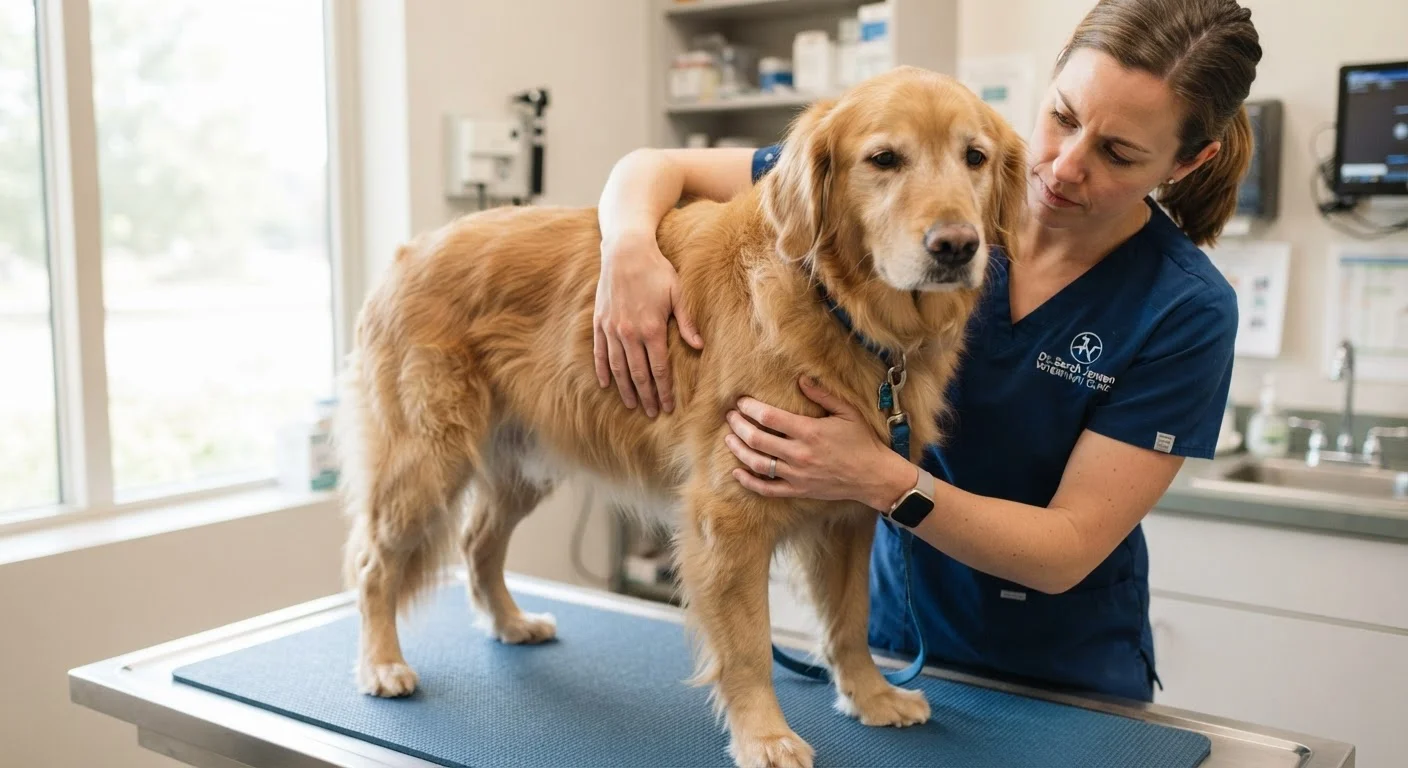
Place your pet on a non-slip surface and stand directly above, looking down. You should see a visible waist behind the ribcage. If the body appears barrel-shaped with no narrowing, excess fat is likely present. If the waist appears severely pinched, the pet may be underweight.
Look at your pet from the side
At eye level from the side, the abdomen should tuck upward behind the ribcage rather than hanging level with or below it. A sagging belly line in a pet that is not pregnant is a common sign of excess weight. A sharply drawn-up abdomen combined with prominent hipbones may indicate the pet is underweight.
Feel the ribs
Run your fingers along the side of the ribcage using light pressure, as though you were feeling through a thin layer of fabric. In a pet at a healthy BCS, individual ribs are easy to feel but not visually prominent. If you have to press firmly to detect any ribs, excess fat is covering them. If every rib is visible without touching, the pet is likely underweight.
Feel the spine and hip bones
Lightly run your hand along the backbone and over the hip area. In a healthy pet, the spine and hip bones should be felt easily but should not protrude sharply. Prominent, sharp-feeling bones suggest too little body fat; bones that are difficult to feel through soft tissue suggest too much.
Assign a score and note any concerns
Based on your observations, place your pet on the 9-point scale. A score of 4 or 5 is generally healthy. A score of 6 or 7 indicates overweight, and 8 or 9 indicates obesity. A score of 3 indicates underweight, and 1 or 2 warrants prompt veterinary attention. Write down the score with today's date so you can compare it at future checks.
Once you have a score, record it with a date. Comparing scores over time matters more than any single reading. If you notice the score moving outside the 4 to 5 range on the 9-point scale, consult your veterinarian before adjusting portion sizes or activity levels. Small dietary changes done without guidance can overcorrect and create new problems. For background on how feeding amounts relate to weight, see the guide to pet portions and calorie needs.
Differences across species and breeds
BCS principles apply to dogs, cats, rabbits, and many other companion animals, but the reference points differ. Cats are assessed at the ribs, spine, and abdomen, and a visible waist is expected when viewed from above. Rabbits are assessed along the spine and hindquarters. Ask your vet for species-specific guidance if your pet is not a dog or cat.
Breed conformation also matters. Greyhounds and other sighthounds naturally show more rib definition than retrievers at the same healthy BCS. Flat-coated or long-haired breeds can appear heavier than they are because fur obscures the waistline. The touch component of BCS is especially informative for these animals, where visual assessment alone can mislead.
Some medical conditions affect how fat is distributed regardless of overall calorie intake. Hypothyroidism in dogs and hyperthyroidism in cats, for example, both alter body composition in ways a basic BCS check may not fully capture. If your pet's score stays in the normal range yet weight continues to change, a veterinary workup is appropriate.
Consistency matters more than precision
Home BCS assessments are most useful when done at the same time of day, by the same person, and using the same scale each time. Minor variation in technique between household members can make scores look inconsistent. Designate one person as the primary assessor and have your vet confirm your technique at your next appointment.
Weight creep is common even when owners follow bag-label feeding instructions. Serving guides on packaging are averages, not individualized prescriptions. The reasons behind weight gain despite correct serving sizes are worth understanding if your pet scores above 5 on repeated checks. For a broader foundation, the introduction to pet nutrition covers how energy balance and feeding schedules interact with body condition over time. See also the Pet Nutrition Guide for a full range of diet and feeding topics.
This article is for informational purposes only and does not constitute veterinary medical advice. Consult a licensed veterinarian before making changes to your pet's diet, exercise routine, or health care plan.