

Key Takeaways
- Unlimited timothy or orchard grass hay should form the foundation of every adult rabbit's diet.
- Fresh leafy greens provide hydration and variety, but not all vegetables are safe for rabbits.
- Pellets are a supplement, not a meal replacement, and portions should be small and measured.
- Foods high in sugar, starch, or oxalic acid can cause serious digestive problems.
- Rabbits have different nutritional needs at different life stages, particularly as juveniles.
Rabbit diet
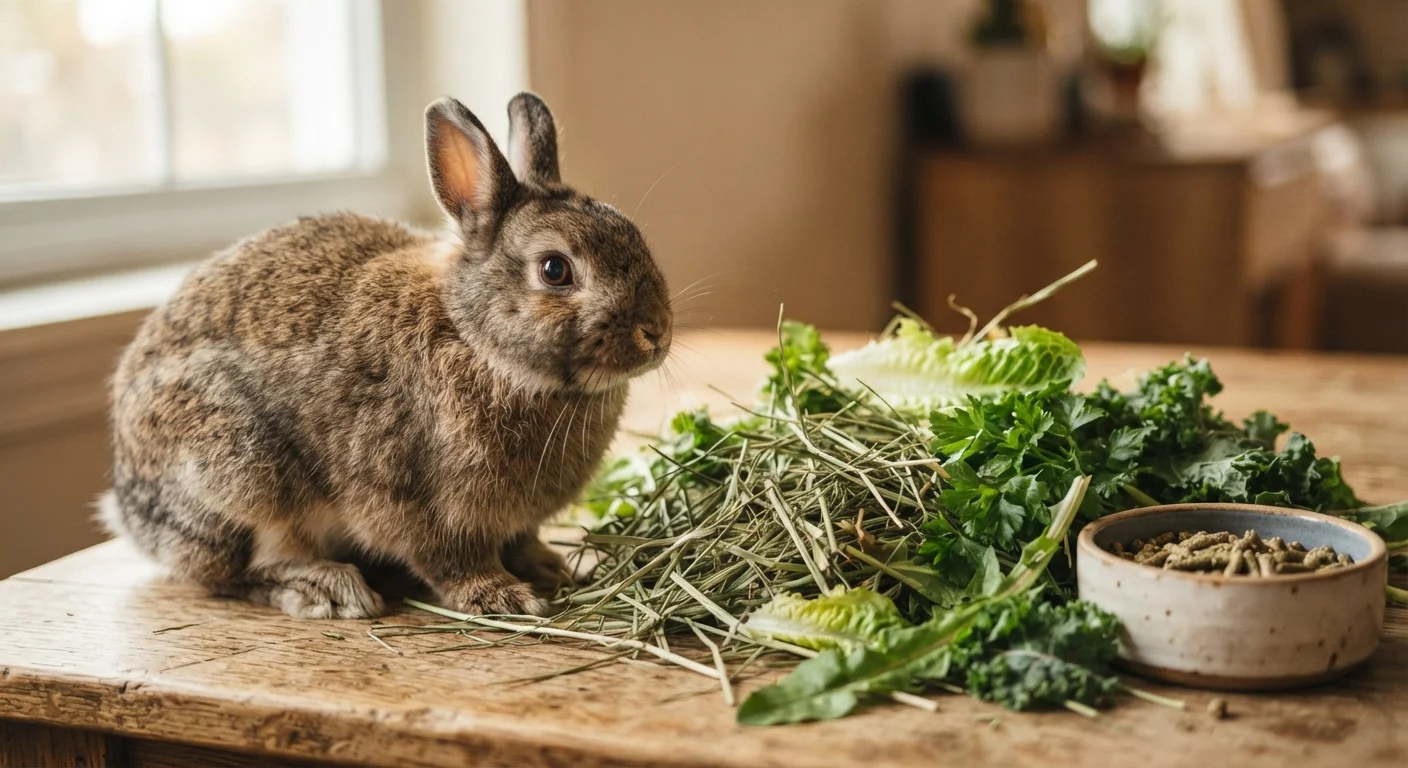
A balanced rabbit diet is built around unlimited grass hay, which should make up roughly 80 percent of what a rabbit eats each day. Fresh leafy greens and a small, measured portion of pellets fill out the rest. Treats such as fruit are occasional additions, not staples.
Rabbits are hindgut fermenters, meaning they extract nutrients from fibrous plant material through a specialized fermentation process in the cecum. They also practice cecotrophy, consuming soft cecal pellets directly from the anus to absorb proteins and vitamins produced there.
Hay is the non-negotiable foundation
Grass hay is not a bedding material or a filler. For a rabbit, it is the primary food, and its importance cannot be overstated. The long, coarse fibers in timothy, orchard grass, or meadow hay keep the digestive tract moving and wear down continuously growing teeth. A rabbit that does not eat enough hay is at risk of GI stasis, a potentially life-threatening slowdown of gut motility, as well as painful dental problems caused by teeth that grow unchecked.
Adult rabbits (seven months and older) do best on grass-based hay. Alfalfa hay is legume-based, higher in calcium and calories, and appropriate for juveniles still growing. Feeding alfalfa to an adult rabbit long-term can lead to weight gain and urinary issues from excess calcium.
Hay should be fresh, sweet-smelling, and green-tinged rather than yellow or dusty. Place it somewhere the rabbit can nibble freely throughout the day, ideally near the litter box, since rabbits often graze and eliminate at the same time.
Keep hay fresh and appealing
Store hay in a breathable container away from moisture and direct sunlight. Musty or dusty hay can cause respiratory irritation and is less likely to be eaten readily. Buying in smaller quantities more frequently is better than stockpiling a large amount that sits and degrades.
Fresh greens: what to offer and how much
Leafy greens add hydration, variety, and a range of micronutrients. A good daily serving for an adult rabbit is roughly one to two packed cups of mixed greens per five pounds of body weight. Variety matters more than volume. Rotating through different leafy options gives the rabbit a broader nutritional profile and prevents over-reliance on any one plant.
Safe choices include romaine lettuce, green-leaf lettuce, bok choy, arugula, cilantro, parsley, basil, and dill. Leafy carrot tops and radish tops are also fine. When adding a new vegetable to the rotation, introduce it one at a time over several days and watch for soft stools or bloating, which signal that the rabbit's gut is reacting.
Vegetables to avoid include anything from the allium family (onions, garlic, leeks, chives), iceberg lettuce (very low in nutrition and high in water to the point of causing loose stools), and large amounts of spinach, which contains oxalic acid that accumulates in the body when fed daily. Fruit is fine as an infrequent treat in small pieces, a teaspoon-sized portion at most, because of its sugar content.
The role of pellets
Pellets were developed to help commercial rabbit operations deliver consistent nutrition efficiently. For a pet rabbit eating varied hay and fresh greens, pellets are supplemental rather than central. A healthy adult rabbit can do well with a small daily portion or none at all, provided the rest of the diet is sound.
When pellets are included, choose a plain timothy-based formula without seeds, colored bits, or dried fruit mixed in. Those additions raise sugar content and tempt rabbits to sort through the bowl rather than eating the nutritionally complete base. A common guideline is roughly one-quarter cup of pellets per five pounds of body weight per day, though a rabbit-savvy veterinarian can help calibrate the right amount for a specific animal's age, weight, and health status.
Juvenile rabbits under seven months can eat alfalfa-based pellets in somewhat larger amounts to support growth. The transition to grass-based pellets and reduced quantities should happen gradually around six to seven months. For more on how nutritional needs shift across a pet's life, see our guide to pet nutrition by life stage.
Rabbit pellets are not all the same
Many products marketed as rabbit food include seeds, corn, dried fruit, and colored pellets. These additions raise sugar and fat content significantly and encourage selective eating. A plain, single-ingredient timothy pellet is a more appropriate choice for an adult rabbit's supplemental portion.
Foods that can cause harm
Some foods that seem harmless are genuinely dangerous to rabbits. Avocado contains persin, a compound toxic to many animals including rabbits. Rhubarb leaves and stalks are toxic. Raw beans contain lectins that cause digestive damage. Fruit pits and apple seeds contain compounds that break down into cyanide and should never be offered. Chocolate, caffeine, and anything containing xylitol (an artificial sweetener common in sugar-free products) are all off-limits.
Starchy foods, including bread, pasta, crackers, and most commercial "rabbit treats" sold in pet stores, are problematic because rabbits' digestive systems are not built to handle concentrated starch. These foods can disrupt the bacterial balance in the cecum and lead to painful gas or diarrhea.
If there is any uncertainty about a specific food, consult a veterinarian with rabbit experience before offering it. Rabbits are often grouped with easy, low-maintenance pets, but their dietary needs are specific and mistakes have real consequences. Understanding the full scope of rabbit ownership helps new owners go in prepared.
Water and how to offer it
Clean water should always be available. Many rabbits drink more readily from a wide, shallow bowl than from a sipper bottle, though both are acceptable. Bowls should be heavy enough that the rabbit cannot tip them and cleaned daily to prevent the bacterial film that builds up quickly in standing water.
Rabbits that eat large amounts of fresh greens get some moisture from their food, but this does not replace the need for free-choice water. During warm months or if the environment is dry, monitor water intake and refresh the bowl more frequently. A rabbit that stops drinking can deteriorate quickly, so any change in water consumption warrants attention and a call to the vet if it persists.
This article is for informational purposes only and is not a substitute for veterinary advice. Consult a rabbit-experienced veterinarian for guidance specific to your pet's health and nutritional needs.